Young Eagles
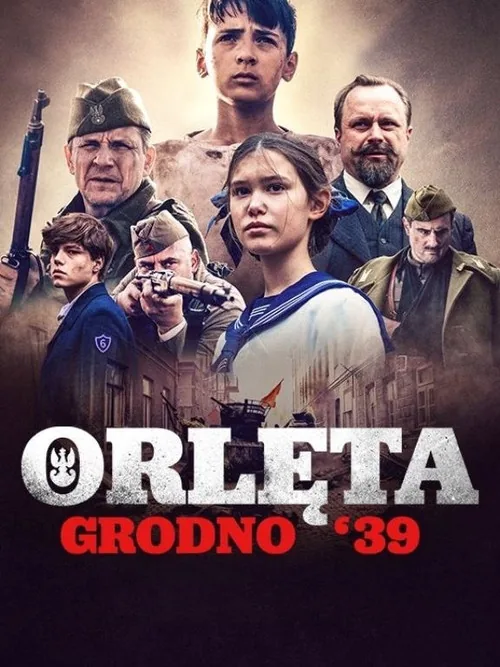
Grodno, the eastern border of pre-war Poland. On September 1, 1939, German planes bomb the city. One of the bombs hits the school of Leoś, Ewelina and Tadek. Literally and symbolically, the world of a carefree childhood, fun and first crushes ends.
Summary
“Young Eagles” (2022) follows Leoś, a schoolboy growing up in Grodno, a multicultural city on Poland’s eastern border, during the last carefree days before World War II. Alongside his friends Ewelina and Tadek, Leoś spends his time in the familiar world of school, games, rivalries, and the first stirrings of romance. Their childhood is shaped by the city’s complicated social landscape, where Polish, Jewish, and other communities live side by side, sometimes uneasily. That fragile normality collapses on September 1, 1939, when German aircraft bomb Grodno and a school building is struck. The attack marks more than the beginning of the war: it signals the destruction of the children’s sense of safety and the end of the world they knew. As the conflict reaches deeper into the city and new occupying forces threaten its people, Leoś, Ewelina, and Tadek are forced to confront fear, loss, prejudice, and responsibilities far beyond their years. The film is presented largely through the children’s perspective, giving its wartime story an intimate and emotional focus. Leoś stands at the center as an ordinary boy whose friendships and youthful feelings are tested by extraordinary circumstances. Ewelina and Tadek are more than companions in his coming-of-age story; their experiences reflect the divisions and loyalties of a city caught between competing powers and identities. “Young Eagles” combines a historical war drama with a story about the abrupt loss of innocence. Its central themes include friendship under pressure, the moral awakening of young people, the destructive force of nationalism and antisemitism, and the courage of civilians facing violence. Rather than treating heroism as something reserved for soldiers, the film explores how ordinary children can be drawn into history and compelled to make difficult choices. The result is a somber portrait of childhood interrupted by war, with Grodno itself serving as both a home worth defending and a symbol of a world being torn apart.