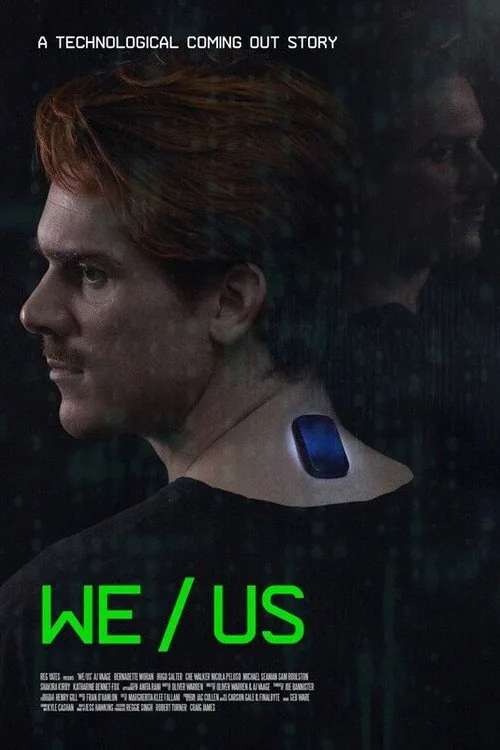
We/Us
A technological coming out story
A young man returns home to visit his family but instead unearths more family trauma - all exacerbated with his choice to merge with other human brains to become one new identity. The family bonds, already fragile, shatter. Against the backdrop of AI, brain chips and networked humans, it brings up the questions of who we really are and how the future will affect the concept of family.
Summary
In We/Us, a young man returns to his family home expecting a difficult but familiar visit, only to find old wounds waiting beneath the surface. The family’s relationships are already strained by unresolved trauma and years of emotional distance, and his arrival gradually brings those tensions into the open. What makes the reunion even more unsettling is the radical choice he has made: using advanced brain-chip technology to merge his consciousness with other human minds and form a new, collective identity. Set against a near-future world shaped by artificial intelligence, neural interfaces, and increasingly networked people, the film blends intimate family drama with speculative science fiction. Its central character is caught between the desire to transcend individual limitations and the consequences of surrendering the boundaries that make a person distinct. For his relatives, the transformation is not merely a technological experiment; it becomes a deeply personal threat that challenges their memories, loyalties, and understanding of who he is. Rather than treating its futuristic premise as simple spectacle, We/Us uses it to examine the emotional mechanics of family. The film asks whether identity is something contained within an individual or something formed through shared history, recognition, and attachment. It also considers whether greater connection necessarily produces greater understanding—or whether erasing separation can make intimacy impossible. The result is a tense, concept-driven story about fractured family bonds and the fear of losing someone who is still physically present but no longer entirely familiar. Its questions about consciousness, autonomy, and technological progress remain closely tied to ordinary human anxieties: the need to belong, the burden of inherited pain, and the struggle to define oneself apart from the people who shaped us.