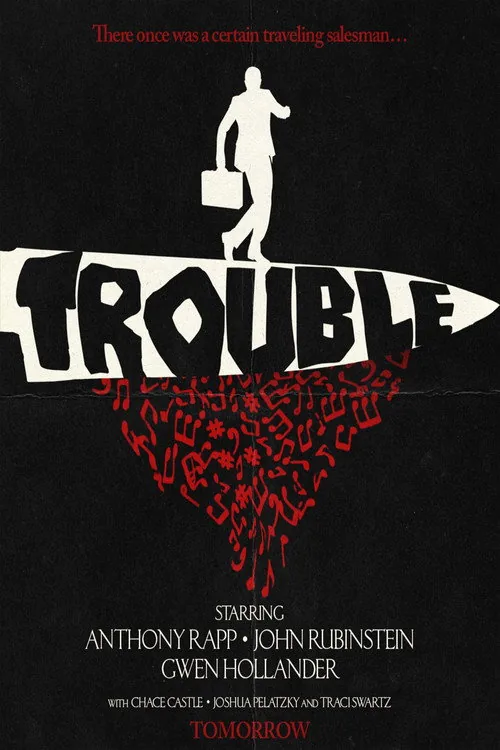
Trouble
Set in 1952, this musical thriller is what happens when a traveling salesman shows up on the doorstep of a dying old man and can't contain the song within his heart. A dark riff on a classic musical.
Summary
Set in 1952, Trouble follows a traveling salesman who arrives at the home of a dying old man and finds himself unable—or unwilling—to suppress the songs rising inside him. What begins as an apparently ordinary visit gradually takes on the shape of a strange, increasingly unsettling encounter, as the salesman’s musical outbursts disturb the household and expose tensions that polite conversation would otherwise keep hidden. The old man, physically weakened but emotionally alert, becomes the salesman’s wary counterpart, while the people surrounding them are drawn into an atmosphere where hospitality, suspicion, and fear constantly overlap. The film uses the familiar structure of the classic American musical—the outsider who arrives in town, the persuasive performer, the promise that song can transform everyday life—and turns it toward darker territory. Here, music is not simply a source of joy or escape. It can be intrusive, seductive, even threatening, revealing desires and anxieties that the characters would rather conceal. The salesman’s buoyant energy contrasts sharply with the old man’s proximity to death, creating a tension between youthful movement and physical decline, performance and silence, hope and resignation. Trouble is ultimately a stylized meditation on mortality, loneliness, repression, and the stories people invent to make suffering bearable. Its blend of musical comedy, psychological suspense, and grim atmosphere gives the film an uncanny quality: familiar theatrical conventions are recognizable, but they no longer feel safe. Without disclosing its later turns, the movie’s central pleasure lies in watching an apparently cheerful song-and-dance premise curdle into something more ambiguous and disturbing.