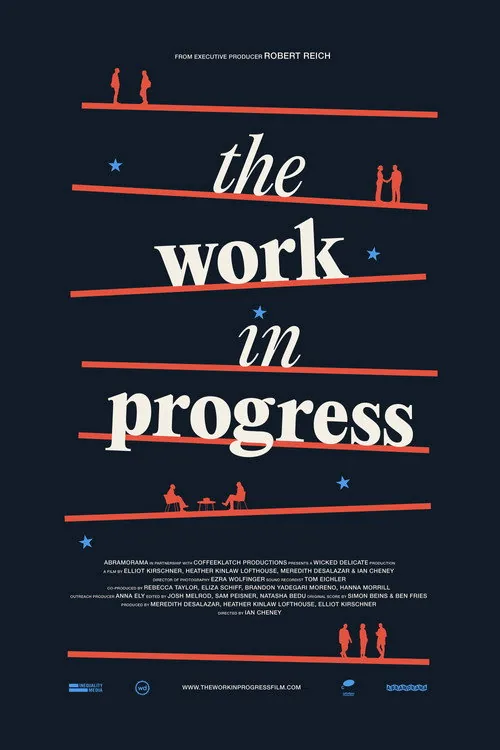
The Work in Progress
Follows Americans engaging in face-to-face conversations about cultural, political, economic, and generational divisions across seven states.
Summary
The Work in Progress (2026) is a timely documentary about Americans attempting to speak across the divisions shaping everyday life. Traveling through seven states, the film brings people together for direct, face-to-face conversations about culture, politics, economics, and the widening gap between generations. Rather than centering on a single protagonist, it follows a broad cross-section of participants whose contrasting experiences and beliefs reveal the complexity behind the country’s most heated arguments. The film’s principal figures are ordinary Americans from different communities and backgrounds, each invited to articulate what they fear, value, resent, or hope to change. Some conversations are tense and guarded, while others develop into moments of curiosity and unexpected connection. Their exchanges form the film’s central narrative: not a debate designed to produce easy winners, but an examination of what happens when people remain in the room long enough to listen. At its core, The Work in Progress explores polarization, social identity, economic insecurity, political mistrust, and the generational forces influencing American life. It considers how personal history and local circumstance shape public opinion, while also asking whether empathy and honest conversation can offer a path through entrenched disagreement. The result is a thoughtful, human-scale portrait of a country struggling to understand itself—unfinished, conflicted, and still searching for common ground.