The Shadowless Tower
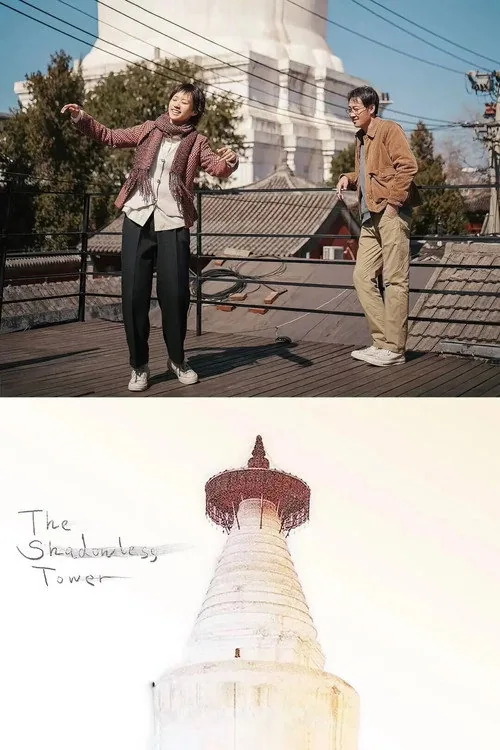
Gu Wentong learns the whereabouts of his father, who lost contact with him more than 40 years ago. Encouraged by new friend, photographer Ouyang Wenhui, Gu Wentong decides to face his father and rebuild the long-lost father-son relationship.
Summary
The Shadowless Tower follows Gu Wentong, a middle-aged food critic living a somewhat adrift life in Beijing. Divorced and separated from his young daughter for much of the time, Gu has grown accustomed to emotional distance, carrying the unresolved absence of a father who disappeared from his life more than four decades earlier. His routine begins to change when he meets Ouyang Wenhui, a thoughtful photographer whose curiosity and openness encourage him to confront the past he has long avoided. When Gu learns that his estranged father may still be alive, he faces the difficult possibility of reconnecting with a man who has remained more memory than presence. His efforts to find and approach his father unfold alongside his growing relationship with Ouyang, whose own perspective helps Gu see his family history—and his responsibilities as a father—in a new light. The film is less concerned with dramatic revelations than with the hesitant, often awkward process of deciding whether old wounds can be acknowledged and whether emotional bonds can be rebuilt after years of silence. Directed by Zhang Lu, The Shadowless Tower is a quiet, observational drama grounded in the streets, restaurants, and changing neighborhoods of Beijing. Gu is portrayed as intelligent and perceptive yet emotionally guarded, a man who can analyze food and other people more easily than he can articulate his own feelings. Ouyang brings warmth and an attentive presence to his life, while Gu’s father embodies the complicated weight of absence, regret, and aging. Together, these characters form an understated portrait of people trying to understand one another across generations. The film explores estrangement, forgiveness, parenthood, and the persistence of family ties even after they have been neglected for decades. It also considers how memory reshapes the past and how ordinary encounters—sharing a meal, taking a photograph, walking through a familiar city—can become steps toward reconciliation. Patient and gently melancholic, The Shadowless Tower finds emotional power in pauses, silences, and the possibility that healing may begin simply with the courage to face what has been left unresolved.