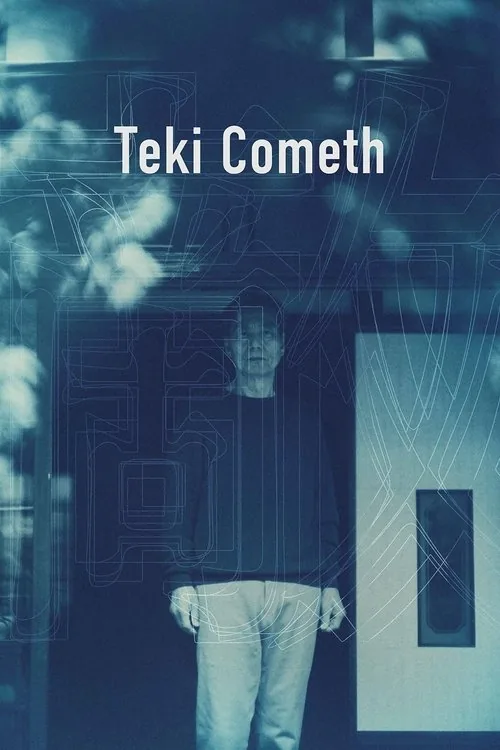
Teki Cometh
Retired university professor Gisuke Watanabe lives a comfortable but secluded life of affluence in the traditional Japanese house built by his grandfather. One day, an anonymous email threatens his peaceful lifestyle.
Summary
Teki Cometh follows Gisuke Watanabe, a retired university professor who has withdrawn into a quiet, carefully ordered life in the traditional Japanese home built by his grandfather. Affluent but increasingly isolated, Gisuke fills his days with familiar rituals, private meals, reading, drinking, and memories of the life he once shared with his late wife. His contact with the outside world is limited, though conversations with family members, former colleagues, and other visitors occasionally disturb the solitude he has chosen. That fragile peace is unsettled when Gisuke receives an anonymous email warning that an enemy is coming. The message offers little explanation, but it begins to intrude on his thoughts and disrupt his confidence in the routines that have sustained him. As he tries to determine whether the threat is real, Gisuke finds himself confronting the uncertainties of age, the unreliability of memory, and the possibility that the danger may be connected as much to his inner life as to the world beyond his house. The film is less a conventional suspense story than a contemplative portrait of a man caught between independence and loneliness. Gisuke’s increasingly inward perspective gives the narrative an ambiguous, dreamlike quality, allowing everyday events, recollections, anxieties, and imagined possibilities to overlap. His home becomes both a refuge and a kind of enclosure, preserving the past while keeping him at a distance from a society that seems to be changing without him. At its center, Teki Cometh explores aging, mortality, grief, and the fear of losing control over one’s own life. It also considers how privilege and education can provide comfort without protecting someone from isolation or existential dread. The mysterious warning serves as a catalyst for Gisuke to question what he has spent his retirement defending—and whether the “enemy” is an external force, the passage of time, or the inevitable confrontation with his own mortality. Through its restrained pacing and psychologically unsettled atmosphere, the film turns a seemingly simple threat into a searching meditation on memory, solitude, and the boundaries between reality and perception.