 14:42
14:42 HARD ROCK ZOMBIES & SLAUGHTERHOUSE ROCK Movie Review Double Feature (Vinegar Syndrome 2022)
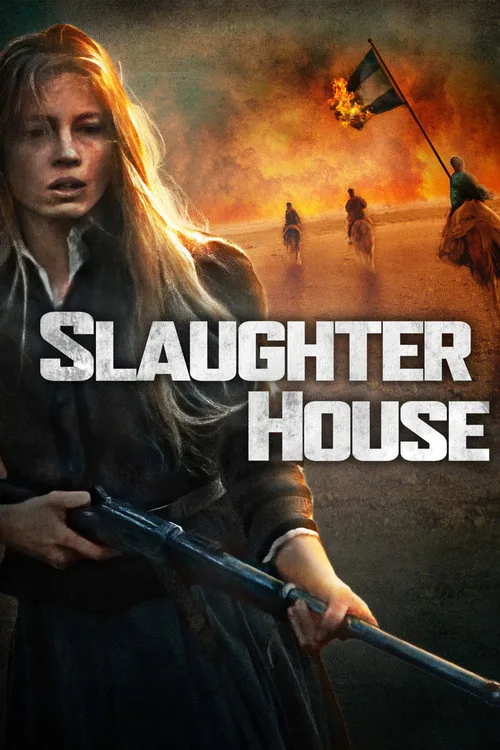
Someone must document the slaughter
1975. An American filmmaker arrives in Argentina to film the story of the first revolt of laborers against landowners. Hoping to document history, instead, he finds himself becoming part of it as he’s swept into the revolt and soon finds himself on the run from the dark bloodiness that is sweeping the country.
Slaughterhouse is a tense political drama set in Argentina in 1975, where an American filmmaker arrives in the countryside to make a film about an early revolt by laborers against powerful landowners. Hoping to capture a defining moment of class struggle on camera, he assembles a production around the story and begins working with local residents, workers, and members of the landowning class. Yet the boundary between historical reenactment and contemporary reality soon starts to collapse. As unrest spreads through the region, the filmmaker finds himself drawn into conflicts he initially approached as an outsider and an observer. The workers’ anger, the landowners’ authority, and the increasingly threatening political atmosphere transform his project into an experience of immediate danger. His attempt to turn rebellion into art forces him to confront the limits of documentary distance—and the possibility that filming history can also mean becoming implicated in it. The film uses its rural setting and period backdrop to examine class exploitation, political repression, and the violence beneath entrenched social hierarchies. It is also a critique of the outsider’s gaze: the filmmaker wants to interpret Argentina’s turmoil, but his perspective is challenged by the people who actually live within it. Slaughterhouse moves between historical drama, political thriller, and a self-conscious reflection on filmmaking, asking whether art can represent violence without reproducing the power imbalances that produced it.