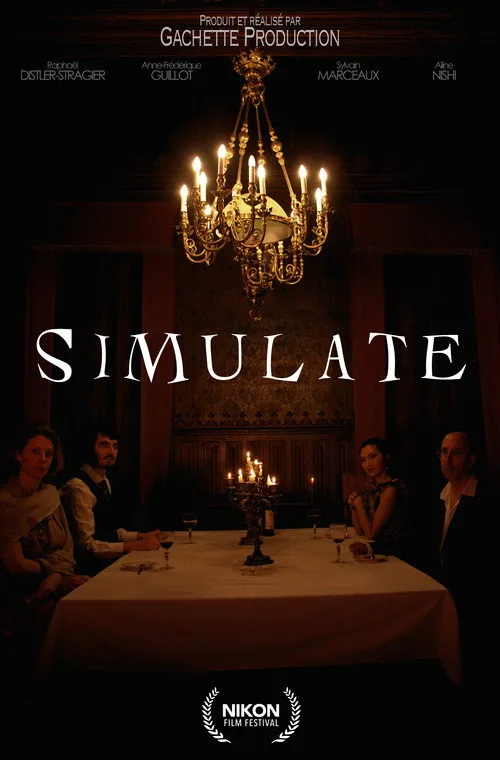
Simulate
Dream or reality?
Friends, dinner, music - it's the life of a lifetime for Jim. After an evening filled with joy and good humour, it's time for Jim and Maé to go to bed. But when Jim wakes up, he finds himself in the middle of a gloomy corridor, surrounded by two doctors. Is it a nightmare or a return to reality?
Summary
“Simulate” (2022) begins with Jim enjoying what appears to be an ideal evening: dinner with friends, music, laughter, and the companionship of Maé. The warmth and ease of the gathering suggest a life filled with familiar pleasures, but the mood changes sharply when Jim goes to sleep. He wakes in a bleak corridor, confronted by two doctors who seem to know more about his situation than he does. Disoriented and unable to reconcile the two realities, Jim must determine whether the evening he remembers was genuine, a dream, or part of something more complex. Jim is the film’s emotional center, a seemingly ordinary man whose confidence in his own memories is gradually unsettled. Maé represents the intimacy and emotional security of the life he believes he knows, while the doctors introduce a colder, clinical perspective that challenges his assumptions. As Jim searches for answers, the film uses the contrast between domestic happiness and institutional unease to create a tense, introspective atmosphere. Rather than relying solely on conventional science-fiction spectacle, “Simulate” focuses on the psychological consequences of uncertainty. Its central concerns include the nature of reality, the reliability of memory, the construction of identity, and the desire to preserve meaningful human connections. The film invites viewers to question what makes an experience authentic and whether a life’s emotional truth depends on its objective reality. With its dreamlike shifts and restrained mystery, “Simulate” plays as a compact, unsettling meditation on consciousness and the fragile boundaries between illusion and reality.