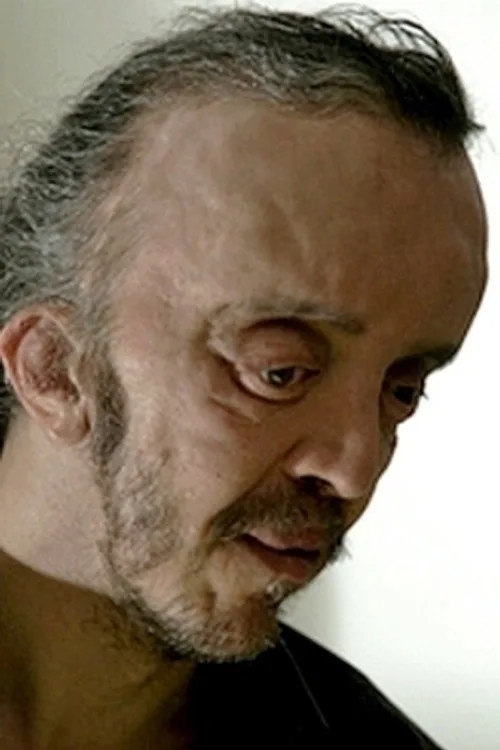
Rak
Having gone blind, Rak returns to live with Elsa, his ex-wife. Faced with a reality he cannot see, he slowly withdraws into the memory of what is no more. The poetic emancipation of a bird in its cage.
Summary
“Rak” follows a man who has recently gone blind and returns to live with Elsa, his ex-wife. Back in a shared domestic space that is both familiar and painfully changed, Rak must confront a reality he can no longer experience visually, as well as the emotional distance that has grown between them. Elsa becomes an uneasy anchor to the present, while Rak increasingly retreats into memories of a life—and perhaps a version of himself—that no longer exists. The film approaches their reunion less as a conventional relationship drama than as an intimate, poetic study of disorientation and emotional withdrawal. Rak’s blindness becomes both a physical condition and a metaphor for his struggle to recognize what remains in front of him. Through the tension between his inward retreat and Elsa’s presence, “Rak” explores loss, dependence, estrangement, and the difficulty of accepting change. Its central image is that of a bird in a cage, suggesting a fragile movement toward liberation even within confinement. Quiet and contemplative, the film is concerned less with plot mechanics than with the shifting boundaries between memory and reality, captivity and freedom, and the past people preserve versus the present they must learn to inhabit.