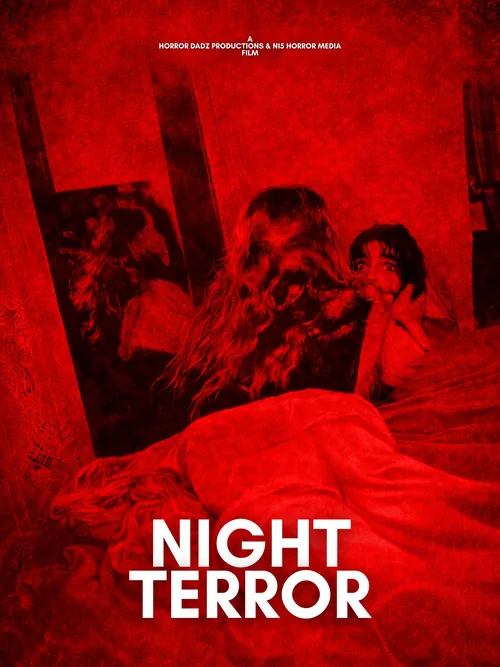
Night Terror
A woman battles lifelong sleep paralysis while living alone. As nightly episodes worsen her mental state, paranormal investigators suggest her condition may have supernatural origins.
Summary
Night Terror (2026) follows a woman who has spent most of her life experiencing sleep paralysis, a frightening condition that leaves her conscious but unable to move as she drifts between sleep and waking. Living alone, she has learned to endure the episodes, yet their increasing frequency and intensity begin to erode her sense of safety and stability. What once seemed like a private medical ordeal gradually takes on the atmosphere of a haunting, as each night brings the possibility of another terrifying encounter. When paranormal investigators become involved, they raise the unsettling possibility that her experiences may not be entirely psychological or physiological. Their theory forces her to reconsider everything she believes about her condition, her home, and the shadowy presence she may be sensing during her attacks. The investigators serve as both potential allies and sources of doubt, complicating the question of whether they are helping her uncover the truth or encouraging an already vulnerable mind to interpret trauma as supernatural evidence. At its core, Night Terror is a psychological horror story about the collapse of certainty. It draws its tension from the helplessness of being trapped inside one’s own body, while exploring the isolation that can accompany an invisible, poorly understood condition. The film also examines the uneasy boundary between sleep and waking, rational explanation and spiritual belief, and genuine paranormal threat and the mind’s attempt to give shape to fear. Rather than relying solely on shocks, it builds horror from repetition and anticipation: the dread of going to bed, the vulnerability of living alone, and the possibility that the next episode may reveal something far more disturbing than a nightmare.