 6:23
6:23 THE DEMON DISORDER (2024) MOVIE REVIEW
When the world crumbles, the punchlines hit hardest
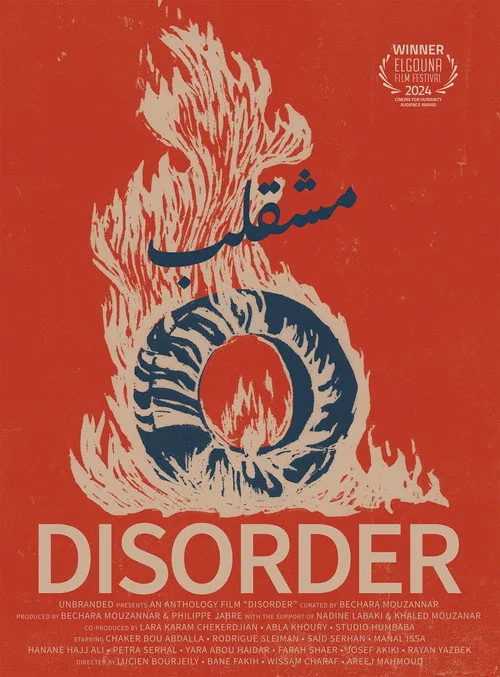
Four darkly funny tales about Lebanon: Activists planning a protest descend into internal strife. Three sisters and their mother argue while an incompetent plumber destroys their flat. Depressed life coach Malek wants to die and seeks help from a «death coach». A stand-up comedian who jokes about a meteor strike that could put Lebanon out of its misery, is blamed when it appears to come true.
“Disorder” (2024) is a darkly comic anthology about life in Lebanon, where political frustration, family conflict, personal despair, and national anxiety collide in increasingly absurd ways. Rather than following one central protagonist, the film unfolds through four separate stories that share a sharp, irreverent view of a society struggling to maintain its balance. In the first story, a group of activists organizes a protest, hoping to turn public anger into collective action. Their plans quickly become complicated by personal rivalries, clashing agendas, and the kind of internal bickering that can undermine even the most principled cause. The result is both a satire of political activism and a portrait of people whose desire for change is weakened by their inability to agree on how to achieve it. Another episode takes place inside a family home, where three sisters and their mother become embroiled in an escalating argument while an incompetent plumber attempts to repair the apartment. What begins as a practical problem exposes years of resentment, unresolved grievances, and differing ideas about responsibility. The household’s mounting chaos turns domestic tension into broad physical comedy, while also suggesting how economic hardship and social pressure can intensify old family wounds. The film’s most openly melancholy thread follows Malek, a depressed life coach who has lost faith in the advice he gives others. Convinced that he wants to die, he seeks guidance from a “death coach,” creating an unsettlingly funny encounter between two people trying to impose structure on despair. Their conversations explore emotional exhaustion, the performance of wellness, and the difficulty of finding meaning when optimism has become a product to be sold. The final story centers on a stand-up comedian who jokes about a meteor strike that could finally put Lebanon out of its misery. When events begin to make the joke seem disturbingly plausible, he finds himself blamed for the consequences of his words. This episode uses the conventions of satire and absurdism to examine collective fear, scapegoating, and the uneasy boundary between comedy and catastrophe. Across its four tales, “Disorder” balances absurd humor with genuine social unease. Its Lebanon is portrayed as a place where institutions fail, families fracture, activism turns inward, and even despair can become entertainment. Yet the film’s comedy is not simply cynical: beneath the chaos is a recognition of people trying, often clumsily, to survive and connect in circumstances that seem designed to overwhelm them.
6:23  10:08
10:08  10:38
10:38  7:00
7:00  9:19
9:19  6:42
6:42