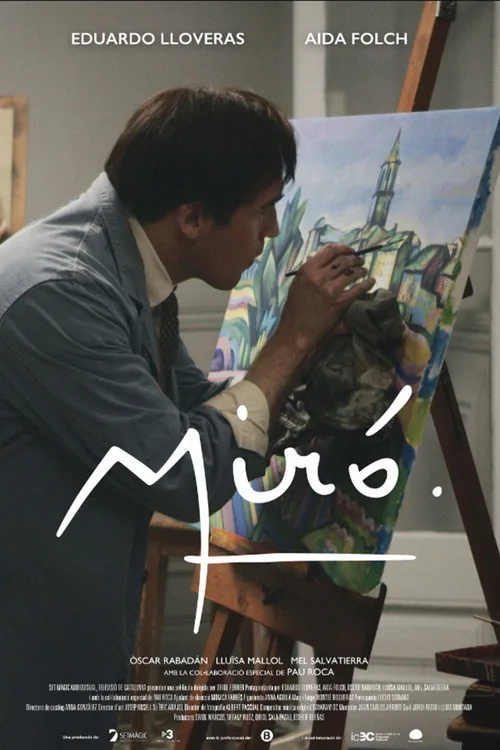
Miró
Miro’s life
Catalan artist Miró and his family and friends try to express their artistic concerns during a tough history period
Summary
“Miró” (2022) offers a portrait of the Catalan artist Joan Miró during a period marked by political upheaval, repression, and cultural uncertainty. Rather than treating his work as isolated from history, the film follows Miró as he struggles to define his artistic voice while remaining connected to his family, friends, and the wider intellectual and artistic circles around him. His creative life unfolds against a difficult national backdrop, where personal freedom and cultural expression are frequently under pressure. At the center is Miró himself: a restless, deeply individual artist whose abstract forms, vivid colors, and symbolic imagery become a way of responding to the world around him. His family provides an emotional and domestic counterpoint to his public identity, while his friends and fellow artists reflect the competing ideas, hopes, and anxieties of the era. Their conversations and relationships help place Miró’s work within the broader history of Catalan culture and modern European art. The film’s central concern is the relationship between art and political reality. It considers whether creativity can resist authoritarianism, preserve identity, or communicate what ordinary language cannot. It also explores the tension between artistic independence and personal responsibility, as well as the ways family, friendship, and cultural belonging shape an artist’s vision. With its focus on both Miró’s private world and the turbulent society surrounding him, the film presents him not simply as a celebrated modernist, but as an artist continually searching for freedom in an age that made genuine expression difficult.