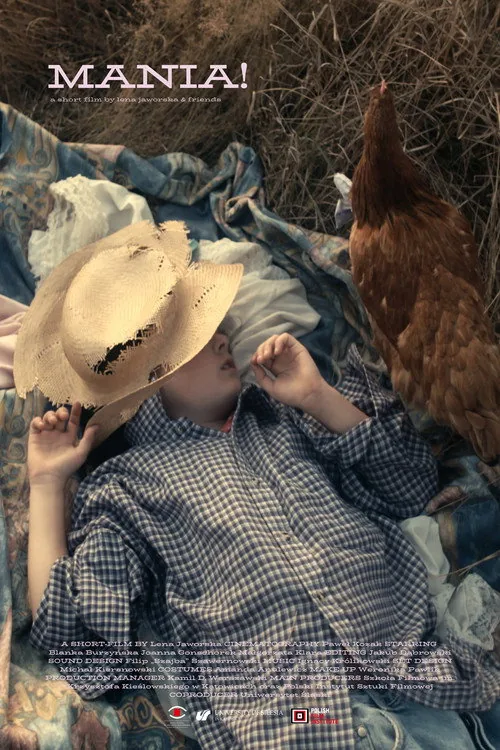
Mania!
Mania’s hysterical mother leaves the little girl at her aunt’s in the countryside. On her lonely summer holiday, Mania makes friends with a hen. The girl stages a rebellion when she realises why her aunt keeps chickens.
Summary
In “Mania!” (2023), a young girl is abruptly deposited in the countryside after her emotionally volatile mother leaves her with an aunt for the summer. Lonely and out of place, Mania finds an unexpected companion in a hen, forming a tender friendship that gives her a sense of comfort and purpose. Her bond with the bird gradually changes the way she sees the farm and the adults around her, particularly her aunt, whose practical relationship with the chickens conceals a reality Mania finds increasingly difficult to accept. The film centers on Mania’s passage from bewilderment to moral awareness. What begins as an isolated child’s attempt to make friends becomes a small but determined rebellion, as she challenges the routines and assumptions of the grown-ups in charge. The aunt represents the unquestioned habits of rural life, while Mania’s mother remains a distant source of emotional instability rather than security. Against them, Mania’s connection with the hen reflects her capacity for empathy and her refusal to treat a living creature as merely useful. Balancing melancholy, dark humor, and a child’s heightened imagination, “Mania!” explores loneliness, abandonment, compassion, and the first stirrings of independence. Its conflict is modest in scale but emotionally meaningful: a child discovers that doing what feels right can mean standing alone against the world of adults. The result is an offbeat coming-of-age story about friendship, animal welfare, and the courage to resist customs that no longer seem humane.