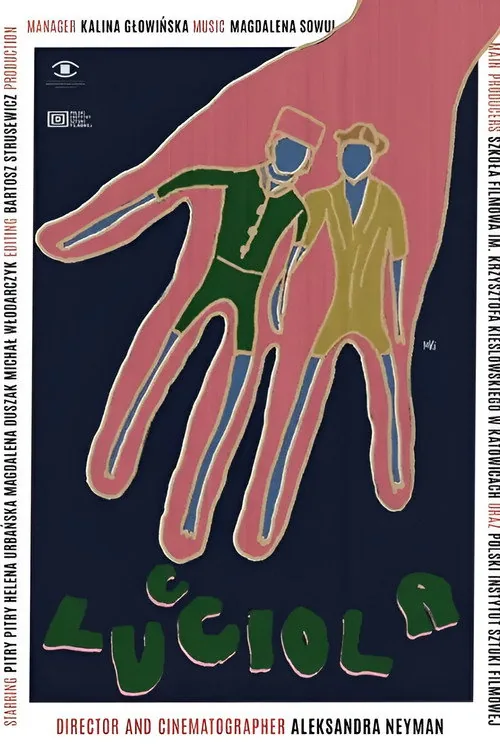
Lucciola
In a world where touch is forbidden, young masseuse Nina works using hand extensions to avoid direct physical contact. She attends ‘self-touch’ sessions and repeats mantras about safety and distance. But one day, she meets Zocha — and everything changes.
Summary
“Lucciola” (2025) is a provocative, intimate drama set in a society where physical touch has become forbidden. Nina, a young masseuse, has built her life around the rules of this world. She performs her work with specially designed hand extensions, allowing her to treat clients without making direct contact, and attends “self-touch” sessions where participants are taught to manage their bodies and emotions from a safe distance. Repeated mantras about protection, control, and separation have become part of Nina’s daily routine, reinforcing the idea that closeness is something dangerous. Although Nina appears to function comfortably within this carefully regulated culture, her work places her in constant proximity to the very sensations society seeks to suppress. Her encounter with Zocha unsettles the discipline she has cultivated. Their connection introduces the possibility of genuine intimacy—messy, instinctive, and impossible to control—and forces Nina to question whether safety without contact is actually a form of freedom. The film centers on Nina’s gradual awakening as she navigates desire, fear, and the pressure to conform. Zocha serves as both a catalyst and an enigmatic presence, challenging Nina’s assumptions about what it means to protect oneself and relate to another person. Through their relationship, “Lucciola” explores the human need for touch, the emotional cost of enforced distance, and the tension between bodily autonomy and social conditioning. Its futuristic premise gives these ideas a stark, unsettling frame, while the focus remains personal: a woman discovering that connection can be frightening precisely because it cannot be fully managed.