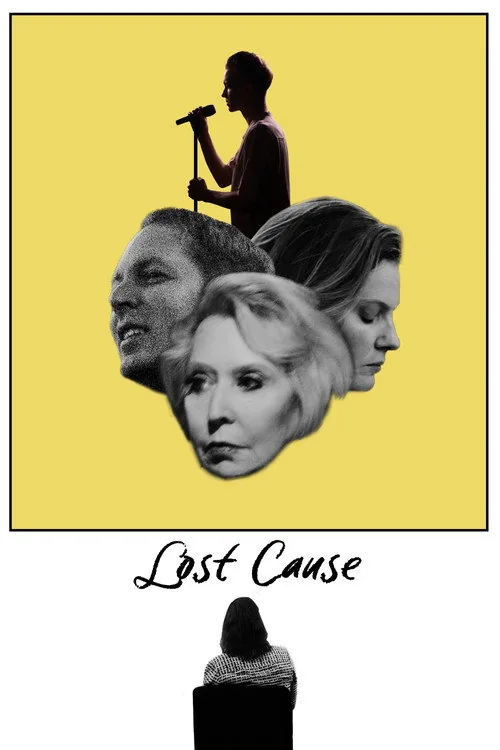
Lost Cause
The election is over. The work has just begun.
Actors workshop an allegorical and fictional new musical for an audience of one, who holds the fate of the play in her hands.
Summary
Lost Cause (2025) follows a group of actors as they develop and rehearse an allegorical musical created for an audience of exactly one. Their performance is not simply a theatrical exercise: the sole spectator has the power to determine whether the production succeeds or fails, making every creative choice feel charged with personal and existential stakes. At the center of the film are the performers themselves, whose collaboration gradually reveals differing ideas about art, purpose, ambition, and what it means to be seen. As they shape the fictional world of the musical, the boundaries between rehearsal and reality begin to blur, inviting the audience to consider whether the characters are putting on a show for their lone viewer—or trying to understand themselves through the roles they play. Blending theatricality with allegory, Lost Cause explores the fragile relationship between artists and audiences, the desire for recognition, and the fear that one’s efforts may be meaningless. Its unusual setup gives the film an intimate, experimental quality, while the musical framework allows it to reflect on failure, hope, performance, and the stories people create when they are searching for a reason to continue.