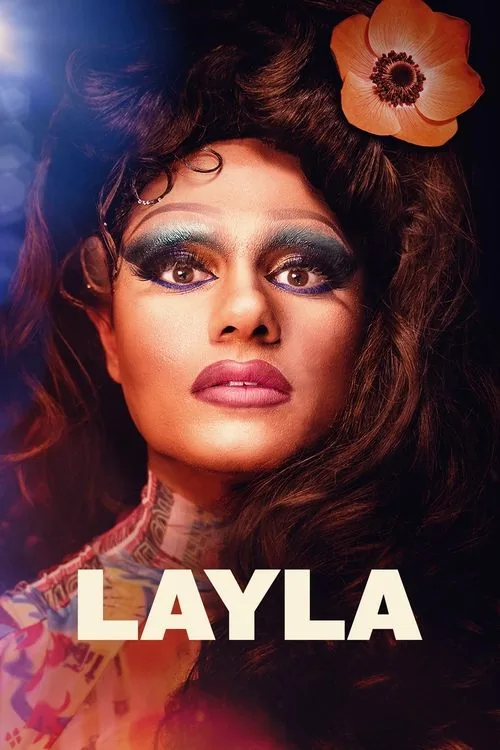
Layla
When Layla, a struggling Arab drag queen, falls in love for the first time, they lose and find themself in a transformative relationship that tests who they really are.
Summary
Layla follows a struggling Arab drag performer in London whose carefully constructed stage persona has become both a source of confidence and a refuge from the pressures of everyday life. When Layla meets Max, a seemingly conventional young man, an unexpected romance begins. For Layla, it is a first experience of falling deeply in love, but the relationship also exposes tensions between the person they perform in public, the person they are still discovering in private, and the identities others expect them to inhabit. As Layla and Max grow closer, Layla is pulled between different worlds: the supportive but sometimes complicated queer community that forms their chosen family, the cultural and familial expectations surrounding their Arab heritage, and Max’s less familiar perspective on gender and identity. Their relationship becomes a catalyst for Layla to question whether the confidence of drag reflects their truest self or protects them from confronting difficult uncertainties. Bilal Hasna gives the film’s central character an appealing mixture of wit, vulnerability, and emotional guardedness, while Louis Greatorex brings an understated openness to Max. Around them, friends, fellow performers, and family members broaden the story beyond the romance, showing the competing forms of love and belonging that shape Layla’s life. Director Amrou Al-Kadhi treats drag not simply as spectacle but as a language through which Layla explores gender, desire, and self-expression. At its heart, Layla is a tender coming-of-age story about a nonbinary person learning to separate self-knowledge from other people’s assumptions. It explores queer love, cultural identity, chosen family, the pressures of assimilation, and the difficult freedom of becoming more honest with oneself. The film balances vibrant drag performances and romantic warmth with a thoughtful look at the fears and compromises that can accompany intimacy, without reducing Layla’s identity to a single label or offering an overly simple path toward self-discovery.