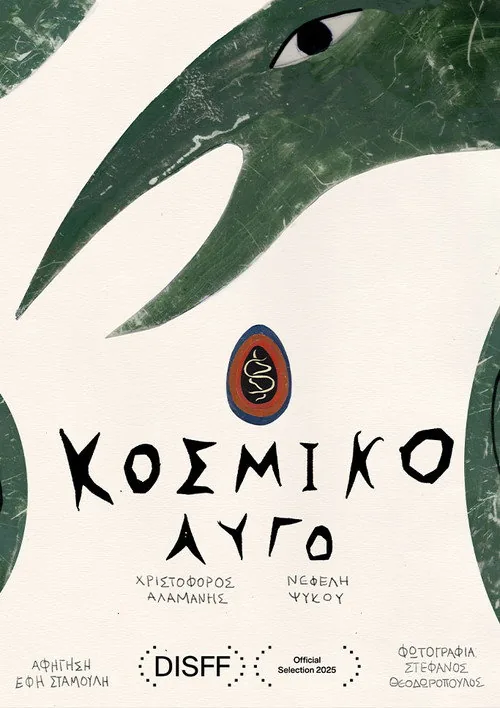
Cosmic Egg
The Snake lays the Cosmic Egg, which births the Cosmos. The Cosmos can only exist until it is time for it to die, and for the next one to be born.
Summary
“Cosmic Egg” (2026) unfolds as a mythic, cosmic fable about the birth, life, and inevitable death of a universe. At the center of the story is the Snake, an ancient and enigmatic force that lays the Cosmic Egg. From that mysterious vessel, the Cosmos comes into being, developing as a vast living realm with its own rhythms, possibilities, and limits. The Egg and the Cosmos function as more than objects or settings: they are central presences in the film’s story, embodying creation and the fragile existence that follows it. As the Cosmos moves through its lifespan, the film explores what it means for a universe to exist under a predetermined cycle. Its central tension does not come from a conventional battle between heroes and villains, but from the unavoidable knowledge that every creation carries the promise of its own ending. The Snake’s role remains deliberately elusive, inviting viewers to consider whether it is a creator, a guardian, a force of nature, or a symbol of the endless cycles that govern existence. Blending cosmic mythology with philosophical science fiction, “Cosmic Egg” reflects on beginnings and endings, mortality on a universal scale, and the relationship between destruction and renewal. The film’s imagery and premise suggest a meditative story about impermanence: the Cosmos is precious not because it can last forever, but because it exists for a finite time before the conditions for something new emerge. Rather than offering a straightforward adventure, “Cosmic Egg” appears designed as a contemplative portrait of creation itself, asking whether an ending should be understood as loss, transformation, or the necessary prelude to another beginning.