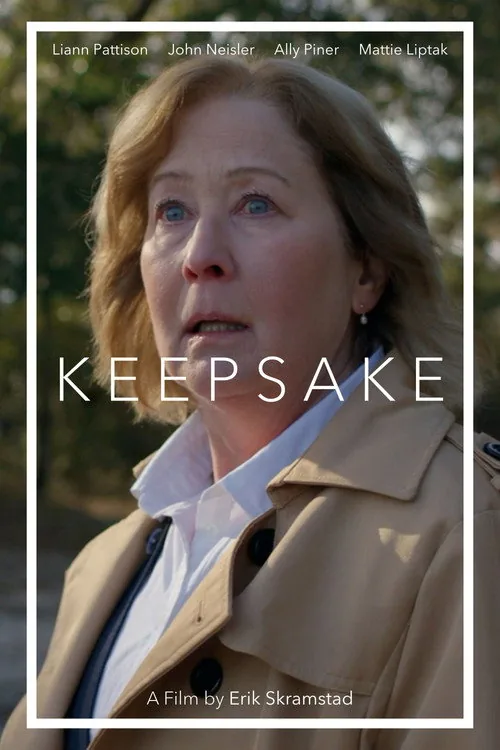
Keepsake
Lily wants a divorce, but when her husband traps them both inside his happiest memory of their relationship she must fight to regain control over her life and her future.
Summary
“Keepsake” (2025) follows Lily, a woman determined to end her marriage and begin reclaiming her independence. Her plans are derailed when her husband traps them both inside his happiest memory of their relationship, transforming a cherished recollection into a disturbing, unstable prison. Cut off from the life she wants and forced to navigate a version of the past shaped by her husband’s emotions and desires, Lily must determine what is real, what has been rewritten, and how much of herself she has surrendered to the marriage. At the center of the film is Lily’s struggle against a husband who refuses to accept that their relationship is over. Their opposing perspectives turn the memory into more than a setting: it becomes a battleground over identity, consent, and the right to define one’s own history. As Lily searches for a way out, the film explores the difference between love and possession, the unreliability of nostalgia, and the danger of preserving a relationship by force rather than allowing it to change or end. Blending psychological suspense with speculative elements, “Keepsake” uses its surreal premise to examine emotional abuse and the ways people can manipulate memories to protect an idealized version of the past. Lily’s fight is not simply to escape an impossible situation, but to recover control over her future and decide which parts of her shared history still belong to her.