Isolation
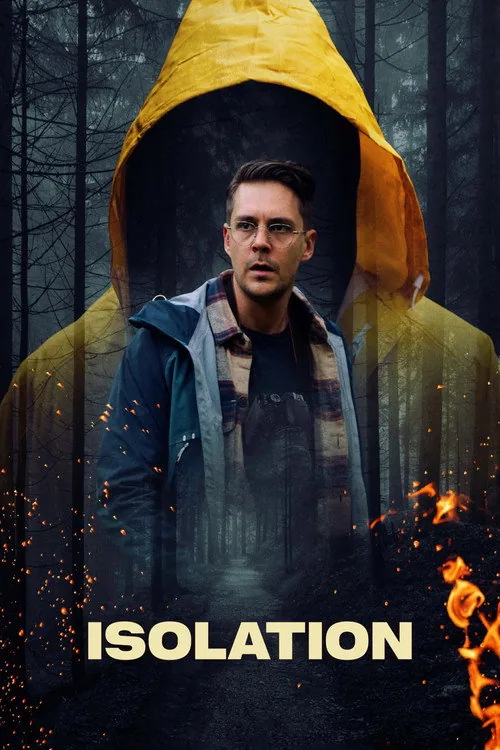
Jovan, a young biologist, gets a well-paying job in a forest, but when he checks the cameras he discovers a man and as time goes by the night calls, strange sounds and isolation plunge him into paranoia.
Summary
“Isolation” (2024) follows Jovan, a young biologist who accepts a well-paying assignment in a remote forest. His job initially seems straightforward: monitor the area and review footage from a network of surveillance cameras. But while checking the recordings, Jovan notices a man moving through the woods—someone who does not appear to belong there. As the days pass, the forest becomes increasingly threatening. Strange sounds echo through the darkness, nighttime phone calls deepen his unease, and the lack of reliable contact with the outside world begins to wear down his sense of security. Jovan’s scientific training encourages him to observe, record, and search for rational explanations, yet the more he investigates, the harder it becomes to distinguish genuine danger from fear and suspicion. The film centers on Jovan’s psychological descent, with the mysterious figure in the footage serving as both a possible threat and a source of uncertainty. The remote setting functions almost like another character: beautiful and expansive by day, oppressive and unknowable at night. Its isolation strips away the distractions and safeguards of ordinary life, leaving Jovan alone with the evidence before him—and with his own imagination. Blending ecological unease with psychological suspense, “Isolation” explores paranoia, surveillance, and the fragility of perception. It asks how much a person can trust what they see when every sound may carry a warning and every unanswered question seems to point toward danger. The result is a tense, atmospheric thriller built less on constant action than on growing dread and the unsettling power of being completely alone.