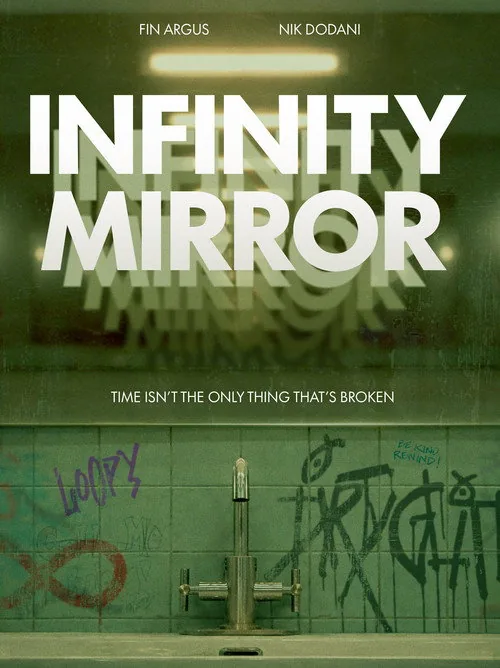
Infinity Mirror
During a tense encounter in a bar bathroom, Bash gets trapped in a time loop with his ex-best friend—and his only hope of escape is to confront what tore them apart.
Summary
In Infinity Mirror (2026), Bash’s uneasy reunion with his former best friend takes a disturbing turn when a tense encounter in a bar bathroom traps them in a time loop. Forced to relive the same charged moment again and again, Bash finds that escape depends not on outmaneuvering the loop, but on facing the unresolved history between them. The film centers on Bash and the friend who was once closest to him, using their confined, repetitive predicament to gradually expose the emotional damage caused by their estrangement. Their relationship is the story’s driving force: every repetition deepens the sense that the loop is connected to more than circumstance, compelling Bash to reckon with the choices, grievances, and misunderstandings that tore them apart. Blending psychological tension with a high-concept science-fiction premise, Infinity Mirror explores memory, guilt, accountability, and the difficulty of repairing a broken friendship. The repetition gives the film a claustrophobic quality while also allowing it to examine how people can become trapped in old versions of themselves and in conflicts they refuse to confront. Rather than treating the time loop as merely a puzzle to solve, the movie uses it as a metaphor for emotional stalemate, making Bash’s struggle as much internal as supernatural.