Index
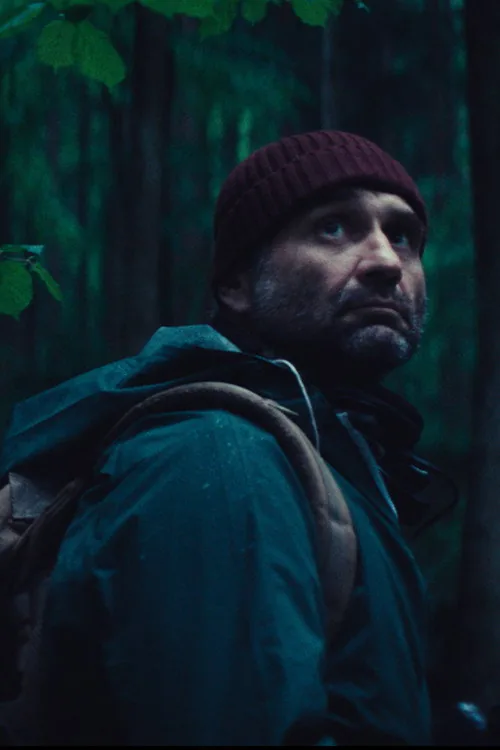
Deep in an uncharted forest, an isolated ornithologist discovers a wild child captured in a grainy video, recorded by one of the infrared cameras he had hidden among the trees.
Summary
Deep in an uncharted forest, an isolated ornithologist lives among the trees, studying birds and monitoring the wilderness with a network of infrared cameras. His solitary routine is disrupted when he reviews one of the recordings and sees what appears to be a wild child moving through the undergrowth. The discovery turns his careful scientific observation into a deeply personal investigation, as he tries to determine who—or what—the child is, how long they have survived in the forest, and whether seeking them out might place them in greater danger. The ornithologist is the film’s central figure: a disciplined but emotionally withdrawn observer whose expertise offers little protection against a mystery that cannot be reduced to data. The child, glimpsed first through grainy images and gradually given greater narrative weight, represents both an individual in need of protection and an enigma shaped by the limits of outside understanding. Their connection forms the emotional core of the story, while the forest itself functions almost as another character—beautiful, watchful, and resistant to human control. “Index” unfolds as an atmospheric mystery rather than a conventional adventure, using the language of field research, surveillance footage, and close observation to explore the boundary between studying a life and interfering with it. Its central themes include isolation, the ethics of curiosity, the human urge to classify the unknown, and the tension between civilization and the natural world. The film also considers what it means to truly see another person when technology provides only fragments and assumptions can be as dangerous as ignorance. Quiet, unsettling, and intentionally enigmatic, “Index” builds its impact through mood and moral uncertainty while keeping its deepest answers just out of reach.