 4:25
4:25 THUNDERBOLTS* (2025) Movie Review | MCU's New Hope?
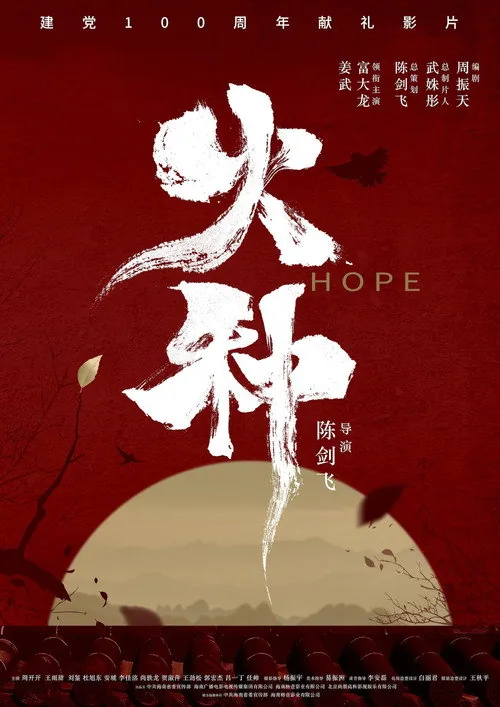
The film, using the years 1919-1927 and 1951 as its timeline, presents Li Dazhao's tireless efforts to save the nation and its people from multiple dimensions and in greater depth. With extraordinary courage to be a pioneer and shoulder moral responsibility, he actively spread Marxism, igniting the flame of hope for the Chinese proletarian revolution and becoming one of the important founders of the Communist Party of China. Furthermore, the film, based on the pioneering thought led by Li Dazhao, resonates with the values of contemporary youth, achieving a dialogue of faith that transcends a century.
Hope (2025) is a historical drama centered on Li Dazhao, the Chinese thinker, educator, and revolutionary whose work helped shape the country’s modern political history. Spanning the years from 1919 to 1927, with a later perspective in 1951, the film follows Li as he confronts a nation weakened by political turmoil, social inequality, foreign pressure, and uncertainty about its future. Rather than presenting him only as a public figure, the story explores the personal risks and moral burdens behind his activism, portraying a man determined to find a path toward national renewal. At the heart of the film is Li’s growing commitment to Marxism and his belief that ordinary workers and citizens must have a meaningful role in transforming society. His efforts bring him into contact with students, intellectuals, laborers, and fellow revolutionaries, including other pioneering figures who share, debate, or challenge his vision. These relationships give the drama both an intimate and a political dimension, showing how ideas spread through conversation, education, organization, and personal example. Li’s family and private life also help reveal the sacrifices demanded by his public mission, as his devotion to a larger cause repeatedly tests the boundaries between responsibility to loved ones and responsibility to the nation. The film presents Li as a courageous pioneer, but not as an untouchable icon. His idealism is accompanied by doubt, pressure, and the constant awareness that historical change requires more than inspiring words. His willingness to accept moral responsibility becomes one of the story’s defining qualities, while his faith in the possibility of a better future gives the film its emotional center. The later timeline broadens that perspective, connecting the hopes and convictions of the early revolutionary period with the experiences of a younger generation decades afterward. Hope is ultimately less a conventional action epic than a reflective portrait of belief in the making. Its central themes include social justice, national independence, intellectual courage, sacrifice, and the power of ideas to outlast the people who first advance them. By linking Li Dazhao’s pioneering thought with the questions facing contemporary youth, the film seeks a dialogue across a century: What does it mean to hold on to one’s ideals in a troubled age, and how can hope become a form of action rather than a passive wish?
4:25  10:04
10:04  10:41
10:41  5:55
5:55  9:19
9:19  2:01:15
  7:48
7:48  7:36
7:36