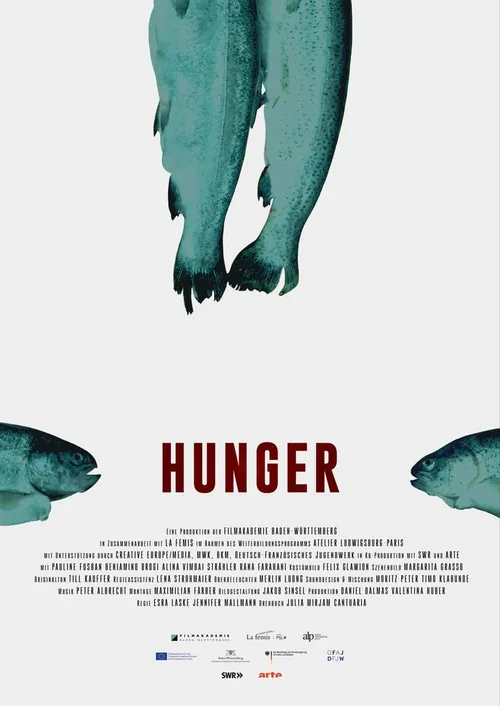
Hambre
Leni and Paul are „all good!“, as Paul likes to emphasise. But on this evening even he realises that this is not true at all. Their new neighbours, Mariam and Ayla, who come over for dinner embody exactly what Leni and Paul have not been for one another as a couple for years. While finishing up dessert, the relationship of the perfect couple, centered on their fluffy dog Amor, unfolds.
Summary
Hambre (2023) unfolds over a seemingly ordinary dinner between two couples. Leni and Paul, the hosts, present themselves as a happy, well-adjusted pair—“all good,” as Paul repeatedly insists. Their carefully maintained image of domestic contentment is reinforced by their cozy home and their beloved fluffy dog, Amor. Yet beneath the polite conversation and practiced hospitality, their relationship has been strained for years. Their new neighbors, Mariam and Ayla, bring an unexpected contrast to the evening. The pair’s apparent ease and connection highlight everything Leni and Paul have lost or avoided confronting in their own partnership. As the meal progresses and dessert is served, small remarks, awkward pauses, and buried resentments gradually expose the instability behind the hosts’ picture-perfect façade. What begins as a friendly introduction becomes an increasingly uncomfortable examination of intimacy, dissatisfaction, and the stories couples tell themselves to preserve the appearance of happiness. More than a conventional domestic drama, Hambre is a tightly focused chamber piece about emotional appetite: the longing to be seen, desired, understood, or simply acknowledged by the person closest to you. The film explores how routine and denial can hollow out a relationship, while comparison with others can make that emptiness impossible to ignore. Its intimate setting and conversational tension turn an everyday dinner into a revealing portrait of two people confronting the distance between how their life looks and how it feels.