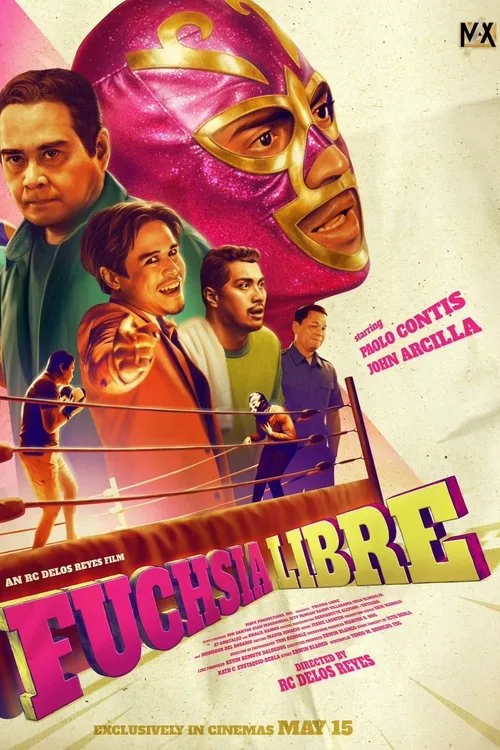
Fuchsia Libre
A secretly gay, “dude, chong, pare, bro” ends up becoming the crowd favorite of an underground wrestling circuit because of his costume and moniker. Can his underground success help him to be loved by his father?
Summary
“Fuchsia Libre” follows a young man who hides his sexuality beneath the casual bravado of a “dude, chong, pare, bro” persona. Seeking an outlet for his frustrations—and perhaps a way to prove himself—he enters an underground wrestling circuit, where his flamboyant costume and memorable ring moniker quickly make him a crowd favorite. What begins as a performance becomes an unexpected source of confidence, community, and recognition. At the heart of the story is his difficult relationship with his father, whose approval he has long wanted but struggles to earn on his own terms. As his popularity grows inside the wrestling scene, he must contend with the gap between the adoration of strangers and the acceptance he craves at home. The film balances the theatrical energy and humor of underground wrestling with a more intimate coming-of-age drama about identity, masculinity, and self-expression. “Fuchsia Libre” explores the pressure to conform to masculine expectations, the risks of living openly in a judgmental environment, and the liberating possibility of creating a persona that reveals rather than conceals one’s true self. Its wrestling setting provides both spectacle and metaphor: the ring becomes a place where the protagonist can challenge social rules, reshape his image, and discover a chosen family, even as he continues to wrestle with the unresolved demands of his biological one.