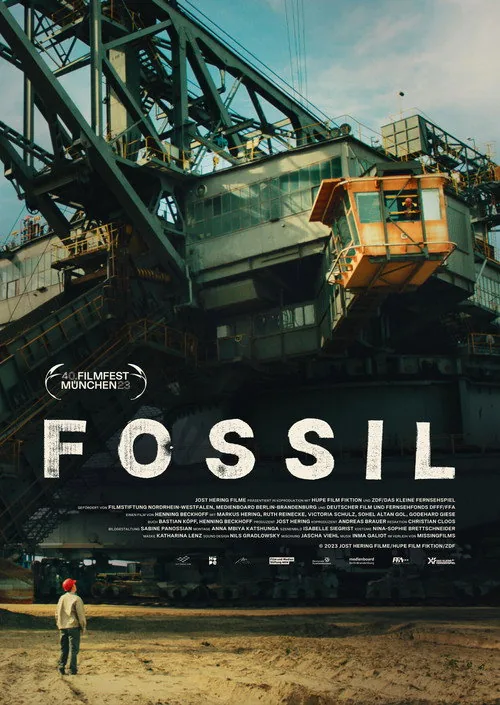
Fossil
Michael, an open-pit miner, refuses to accept the fact that coal is being phased out. He doesn’t want things to change. Working in an open-pit mine is more than just a job to him. He tries to convince his co-workers to join in his protest of the changes afoot, but by not being able to let go, he gets less and less support — even from his family.
Summary
“Fossil” (2024) is a grounded drama about Michael, a veteran open-pit miner who sees the decline of coal not simply as an economic shift, but as a threat to his identity and entire way of life. For Michael, the mine represents far more than employment: it is a source of pride, routine, community, and belonging. When plans to phase out coal begin to reshape the industry, he refuses to accept that the world he knows is disappearing. Determined to resist the changes, Michael tries to rally his fellow miners behind a protest. Yet his increasingly uncompromising attitude makes it difficult to maintain their support. As colleagues begin to consider their own futures and the realities of a changing industry, Michael finds himself increasingly isolated. The conflict also reaches into his home life, where his inability to let go creates growing tension with his family and exposes the personal cost of his resistance. The film’s central character is a man caught between loyalty to his past and the demands of the future. Michael is neither portrayed simply as a heroic defender of workers nor as an obstacle to progress; instead, the story explores the fear, dignity, and stubbornness that can accompany profound social change. His struggle reflects that of communities built around industries that are gradually being dismantled, leaving people to question what remains when their work is no longer considered essential. With its focus on labor, family, and the emotional consequences of industrial transition, “Fossil” considers the meaning of identity in a changing world. It examines generational divides, the loss of community, and the difficulty of separating personal worth from one’s occupation. More broadly, the film asks whether progress can be embraced without dismissing the people and traditions left behind, offering a sympathetic portrait of someone who cannot yet imagine a future beyond the mine.