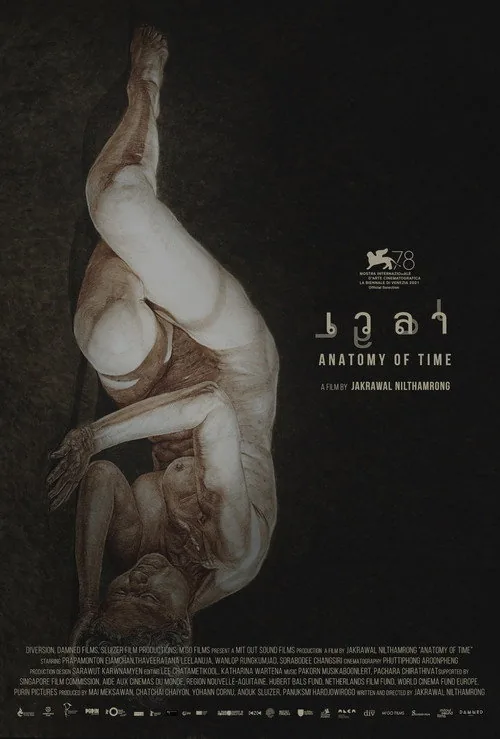
Anatomy of Time
A spiritual time-shifting drama following a woman from her carefree 20s in 1960s rural Thailand to present-day Bangkok as an older army general's wife.
Summary
Anatomy of Time is a meditative Thai drama that follows Maem across two very different periods of her life. In the present day, she is an aging woman living in Bangkok with her frail, retired army-general husband. Their household has become a place of caregiving, routine, and quiet emotional distance, as Maem attends to a man whose body and authority are steadily failing. The film then moves back and forth between this subdued present and Maem’s carefree youth in rural Thailand during the 1960s, when she was surrounded by family, open countryside, and the uncertainty of a future not yet shaped by marriage, military power, or age. Through these shifting timelines, the film traces Maem’s relationship with the man who becomes her husband, presenting both the tenderness and the compromises embedded in a long marriage. The younger Maem experiences a world of romantic possibility and ordinary pleasures, while the older Maem confronts the physical realities of aging and the accumulated weight of decades spent beside a powerful, complicated man. Their personal history is gradually set against Thailand’s wider social and political changes, particularly the influence of the military and the ways national power can enter private life. Rather than relying on conventional plot mechanics, Anatomy of Time uses repetition, visual echoes, silence, and abrupt transitions between past and present to suggest how memory actually works. Time feels fluid and layered: moments of youth remain emotionally alive, while the present continually alters their meaning. The film’s central concerns include love and obligation, the unequal burdens of marriage, the passage of time, bodily decline, memory, and the relationship between intimate experience and political history. Its contemplative pace and elliptical storytelling make it less a conventional biography than a poetic portrait of a woman looking back on the life she has lived—and on the choices, losses, and compromises that have shaped it.