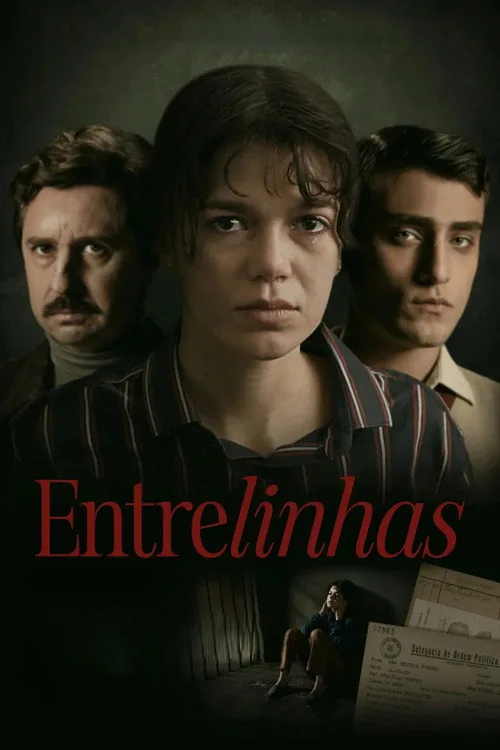
Entrelinhas
1970. Beatriz is an 18-year-old student. She is detained by the military dictatorship in Curitiba, Brazil, and tortured for ten days accused of belonging to the subversive student movement and an armed guerrilla that fights against the regime, VAR-Palmares.
Summary
Set in Curitiba in 1970, Entrelinhas follows Beatriz, an 18-year-old student whose life is upended when Brazil’s military dictatorship arrests her on suspicion of involvement with the student resistance and VAR-Palmares, an armed guerrilla organization opposed to the regime. Taken into custody, she is subjected to ten days of interrogation and torture, while the authorities attempt to force her to reveal information about an underground political network. The film centers on Beatriz’s ordeal, moving between the immediacy of her detention and the wider political climate that made young activists targets of state violence. Around her are the military officers who represent the dictatorship’s machinery of fear, as well as the friends, fellow students, and loved ones connected to the movement and affected by her disappearance. Their presence helps portray the personal cost of political repression beyond the interrogation room. Rather than treating Beatriz simply as a symbol, Entrelinhas emphasizes her youth, vulnerability, convictions, and psychological struggle. Its central themes include resistance under authoritarian rule, the abuse of power, the silencing of dissent, and the endurance of memory in the face of official denial. The film also examines the blurred boundary between political accusation and manufactured guilt, showing how a regime can turn ordinary acts of solidarity or opposition into evidence of subversion. Somber and intimate, it is both a historical drama about Brazil’s dictatorship and a portrait of the courage required to preserve one’s identity when every word can be used against you.