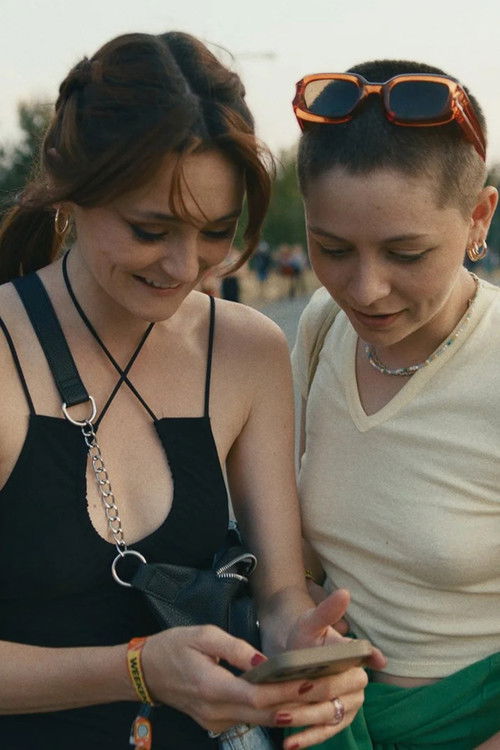
Drop
When restless Lisa tries to sneak backstage at a techno festival, a fun night out with her best friend turns into a confrontation with her own psyche.

Summary
“Drop” (2026) follows Lisa, a restless young woman looking for excitement, as she heads to a techno festival with her best friend. Hoping to slip backstage and make the night feel more memorable, Lisa turns a carefree outing into an increasingly unsettling encounter with her own thoughts, impulses, and insecurities. What begins as a rebellious attempt to escape boredom gradually becomes a psychologically charged experience in which the festival’s sensory overload mirrors Lisa’s troubled state of mind. At the center of the film is Lisa, whose appetite for novelty and risk suggests a deeper dissatisfaction she may not fully understand. Her best friend provides companionship and a grounding presence, while also highlighting the tension between Lisa’s desire to break free and the emotional realities she may be avoiding. As the night unfolds, the boundaries between external adventure and inner turmoil grow less certain. Rather than treating the festival simply as a backdrop for youthful excess, “Drop” uses its pulsing music, crowded spaces, and heightened atmosphere to explore restlessness, friendship, identity, and the uneasy ways people try to outrun themselves. The film’s central question is not merely whether Lisa can pull off her backstage plan, but what she is really seeking—and whether a brief rush of freedom can quiet the conflicts within her. Without giving away its later developments, “Drop” promises a tense, introspective portrait of a night when entertainment and self-confrontation become impossible to separate.
