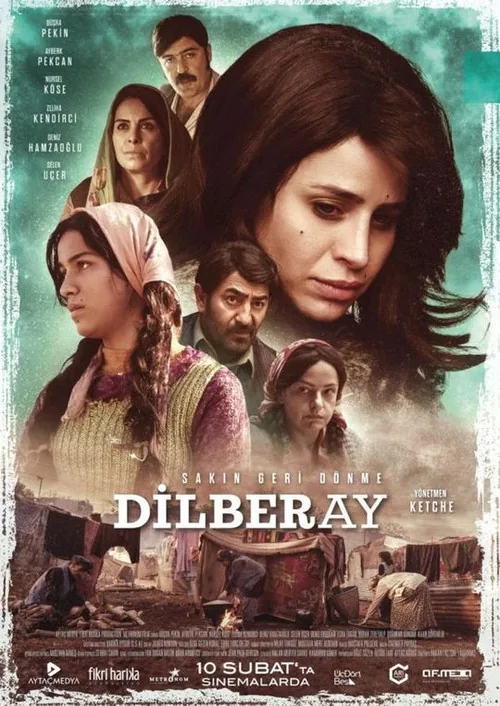
Dilberay
Born into a poor family with eight children in Kahramanmaraş, Dilber Ay endured many sorrows and hardships in the life she began in a tent. At the age of 13, she was sold to an older man for money, they married, and had children. She was beaten and tortured for singing, but despite all the pain she endured, she rose to the top of the stage with the strength she drew from her God-given voice, and she also experienced prison. She never gave up, always singing her way out of the bottomless pits she fell into.
Summary
Dilberay (2022) is a Turkish biographical drama about the life of folk singer Dilber Ay, tracing her journey from extreme poverty to recognition as one of the most distinctive voices in Turkish music. Born into a large, impoverished family in Kahramanmaraş, Dilber grows up in difficult conditions, spending part of her childhood in a tent and learning early that survival often depends on endurance rather than choice. Her hardships intensify when, at just 13, she is sold into marriage with an older man. The relationship subjects her to abuse and control, while the responsibilities of marriage and motherhood arrive before she has had the chance to experience an ordinary childhood. Singing becomes both a source of comfort and an act of defiance. Although those around her try to silence her and even punish her for performing, Dilber’s powerful voice offers a way to express pain that she cannot otherwise escape. The film follows Dilber through cycles of domestic violence, poverty, separation, and imprisonment as she struggles to protect her dignity and care for her children. Along the way, music gradually opens a path beyond the limitations imposed on her. Her raw talent brings her into contact with audiences and people who recognize her gift, but the transition from an oppressed young woman to a professional performer is portrayed as difficult and uneven rather than miraculous. Every step forward carries the weight of the life she has endured. At its center, Dilberay is a portrait of a woman who refuses to be defined solely by the suffering inflicted upon her. The film explores the oppression of women, child marriage, class inequality, and the ways patriarchal traditions can deny people control over their own lives. At the same time, it treats folk music as more than entertainment: for Dilber, singing becomes memory, resistance, and a means of reclaiming her identity. The performance at the heart of the film is therefore both a career and a form of survival. Anchored by a committed lead performance, Dilberay emphasizes its subject’s emotional resilience and unmistakable artistic presence. It is a conventional but affecting rise-through-adversity story, less interested in polishing Dilber Ay’s struggles than in showing how much strength she had to summon simply to keep moving forward. The result is a heartfelt portrait of a singer whose voice emerged from hardship without being defeated by it.