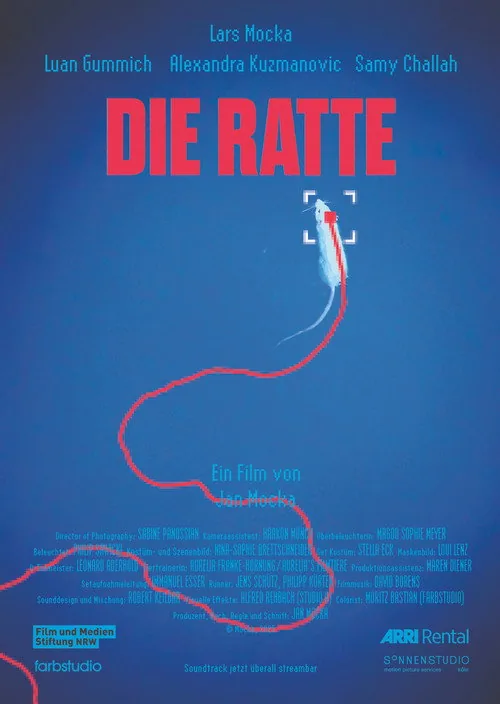
The Rat
A disturbed biohacker accomplishes the impossible: he implants a chip with which he can control a rat’s free will via computer command. But when his partner betrays him to profit from their breakthrough, he plunges into moral darkness and soon makes a desperate attempt to escape his own depression.
Summary
The Rat (2025) follows a troubled biohacker who achieves a breakthrough that sounds impossible: by implanting a computer-controlled chip, he can override a rat’s instincts and direct its actions through digital commands. What begins as a startling experiment in neuroscience quickly becomes a dangerous demonstration of how technology can blur the line between scientific discovery and the violation of free will. At the center of the story is the biohacker himself, an intelligent but psychologically fragile man whose fixation on his work appears tied to a deepening depression and a growing sense of isolation. His partner, initially connected to the project and its promise, becomes a source of conflict when the prospect of turning their discovery into profit takes precedence over loyalty and ethical responsibility. The rat is more than a laboratory subject: it becomes the film’s unnerving symbol of autonomy under threat, as well as a mirror for the protagonist’s own feelings of helplessness and control. As betrayal fractures the partnership, the biohacker’s pursuit of recognition and revenge pushes him into increasingly morally compromised territory. The film uses the premise of remote control not simply as a science-fiction hook, but as a way to examine exploitation, ownership, and the seductive fantasy of commanding another living being. Its intimate focus on a damaged creator gives the story a bleak psychological edge, while the experimental technology raises broader questions about scientific ambition and the consequences of treating life as a programmable system. Rather than presenting its breakthrough as a clean triumph, The Rat frames it as the beginning of a personal and ethical collapse. The result is a dark, unsettling drama about betrayal, depression, and the high cost of confusing control with freedom.