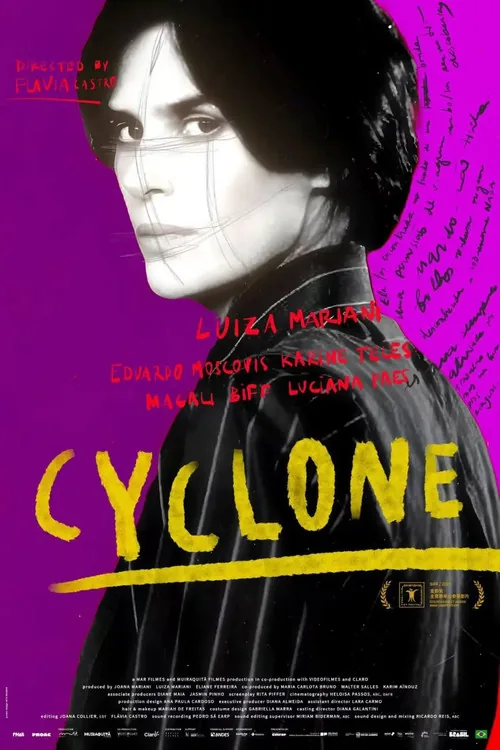
Cyclone
Dayse, a Brazilian playwright known as Cyclone, wants to study in Paris. Having a career in theater is unthinkable for a woman in São Paulo in 1918. But her director doesn’t want her to go, as he would lose his mistress and ghostwriter. When she becomes pregnant by him, her dream starts to fade. An artist’s struggle for self-determination in a patriarchal society, based on the true story of Daisy Pontes and modernist Oswald de Andrade.
Summary
Set in São Paulo in 1918, Cyclone follows Dayse, a gifted playwright who writes under the name Cyclone and dreams of studying in Paris. In a society that considers a professional theater career improper for women, Dayse has already carved out an unusual place for herself as a writer and creative force. Yet much of her success depends on a relationship that is both romantic and exploitative: her theater director treats her as his mistress and relies on her as an uncredited ghostwriter, even as he fears that her departure would cost him both. When Dayse becomes pregnant by him, the future she has imagined begins to seem increasingly out of reach. Her personal circumstances collide with the restrictions imposed by family, reputation, gender, and the cultural world she hopes to enter. As she struggles to protect her artistic voice and determine the course of her own life, the film portrays the painful imbalance between a woman’s creative ambition and the men who benefit from it. Based on the true story of Daisy Pontes and her connection to modernist figure Oswald de Andrade, Cyclone is both a period drama and a portrait of an artist fighting to be recognized on her own terms. Its central themes include female self-determination, authorship, exploitation, motherhood, and the cost of pursuing freedom in a patriarchal society. Dayse’s journey gives the film its emotional core: she is not simply trying to escape São Paulo, but to claim ownership of her work, her body, and the story of her own life.
Cast