COR
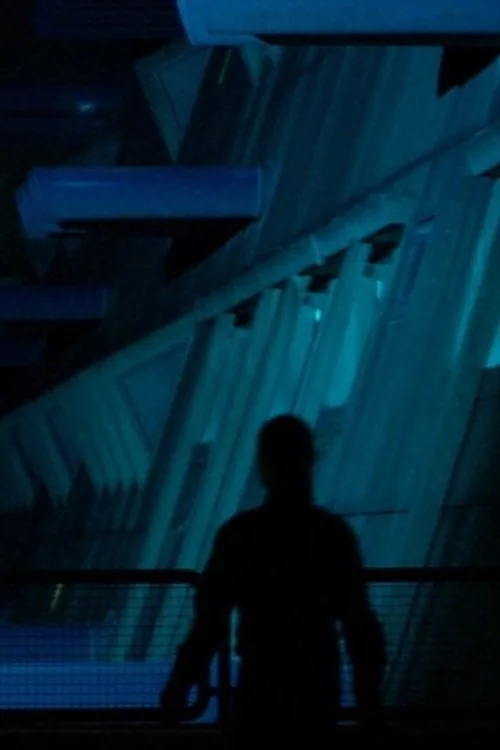
2091. In an efficiency-driven megacity, built of concrete and neon, a disruptive encounter triggers "II / IKI" to begin her search for her identity.
Summary
Set in 2091, COR unfolds in a vast megacity where concrete architecture, neon light, and relentless efficiency define everyday life. In this highly controlled environment, people appear to exist less as individuals than as functional parts of a system designed to eliminate waste, uncertainty, and personal deviation. At the center of the story is II, also known as IKI, whose carefully ordered existence is unsettled by a disruptive encounter. What initially feels like an isolated disturbance gradually becomes the beginning of a deeper personal investigation, leading her to question who she is, how her identity was formed, and whether the life assigned to her truly belongs to her. II/IKI is the film’s essential perspective: a figure caught between conformity and awakening, moving through an impersonal city that seems to know her better than she knows herself. The surrounding society functions almost like another principal character, with its rigid structures and efficiency-driven logic pressing constantly against her growing need for autonomy. As she searches for answers, COR focuses less on conventional action than on the psychological and existential consequences of living in a world where individuality may be treated as a problem to be solved. The film’s central themes include identity, free will, alienation, and the tension between human complexity and technological or institutional control. Its stark visual world—concrete, neon, and carefully regulated urban space—reflects II/IKI’s inner uncertainty, while her search suggests that self-knowledge can become an act of resistance. Atmospheric and speculative in its approach, COR uses its futuristic setting to ask whether a person can recover an authentic sense of self inside a society built to make everyone efficient, predictable, and interchangeable.