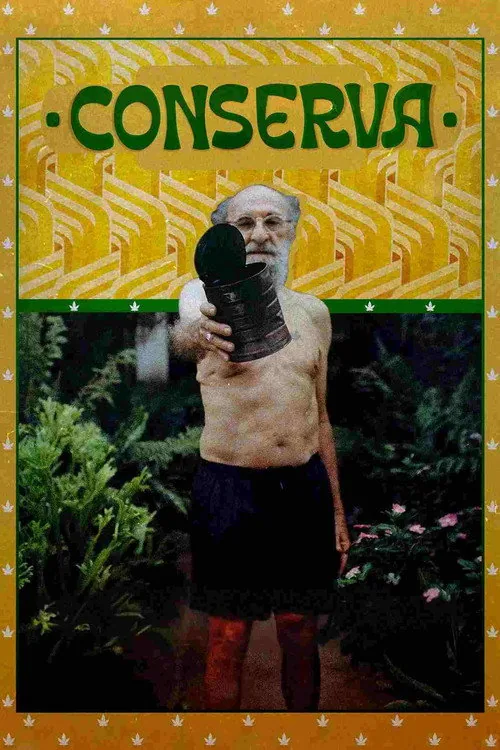
Conserva
Old Pereira remembers a gift he got from the sea during the Summer of Lata in 1988, in northeastern Brazil.
Summary
Conserva (2023) is a quietly atmospheric Brazilian film built around the memories of Pereira, an elderly man looking back on a life-changing encounter with the sea during the “Summer of the Can” in northeastern Brazil in 1988. As Pereira revisits that charged period, the film moves between the present and the remembered past, portraying the younger man he once was and the coastal world shaped by rumor, scarcity, chance, and the constant presence of the ocean. At the center is Pereira himself, whose recollection gives the story its intimate, subjective point of view. The people around him—neighbors, fellow residents, and figures drawn into the strange event that reaches the shore—help evoke a community suspended between everyday hardship and the promise of sudden transformation. Rather than treating the historical episode simply as sensational material, the film uses it as a prism through which Pereira’s personal history and the region’s social reality come into focus. Conserva is principally concerned with the uncertain relationship between memory and truth. Pereira’s account carries the warmth, distortion, and mystery of an old story, leaving room for the audience to consider how experience becomes legend over time. The sea functions both as a physical setting and as a powerful symbol: it brings unexpected possibilities, but also reflects forces beyond anyone’s control. Themes of aging, desire, social inequality, nostalgia, and the stories people preserve in order to make sense of their lives give the film a wistful, contemplative character. Through its restrained storytelling and sense of place, Conserva turns a curious coastal incident into a meditation on what we receive from the past—and what we choose to keep.