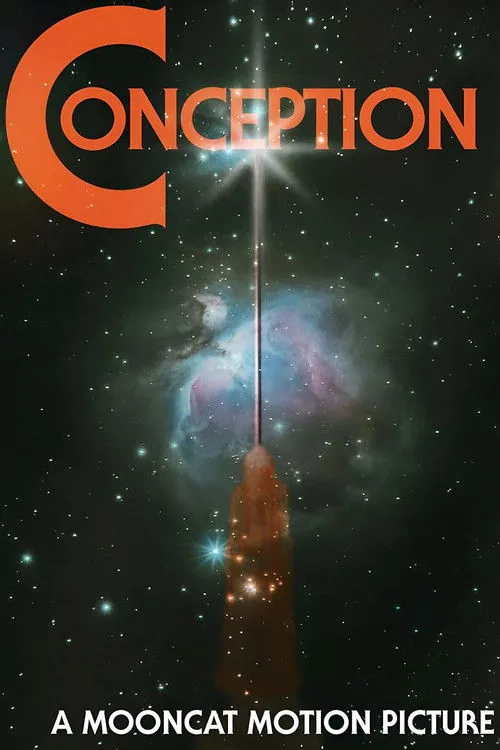
Conception
After the fall of American democracy and a wave of strange atmospheric disturbances, a recently widowed woman discovers something malevolent among her late husband's conspiracy memorabilia.
Summary
“Conception” (2026) is a paranoid, atmospheric thriller set in an America transformed by the collapse of democratic institutions and a succession of inexplicable disturbances in the sky. At its center is a recently widowed woman trying to rebuild her life while sorting through the conspiracy materials left behind by her late husband. What initially looks like the familiar clutter of an obsessive believer—documents, recordings, theories, and unsettling keepsakes—gradually takes on a more disturbing significance when she discovers evidence of something genuinely malevolent concealed within it. The widow is the film’s emotional and investigative anchor. Grieving, isolated, and unsure which memories of her marriage she can trust, she is forced to reconsider both her husband’s convictions and her own assumptions about reality. Her late husband remains a powerful presence through the archive he left behind, while the fractured society around her provides a broader cast of institutional remnants, frightened citizens, and possible collaborators or witnesses whose motives are difficult to read. Rather than treating conspiracy culture simply as a source of sensationalism, “Conception” uses it to explore what happens when public truth collapses. Its strange atmospheric events mirror a nation’s political and psychological instability, blurring the boundary between collective panic and genuine supernatural threat. The film’s central themes include grief, distrust, the seduction of hidden explanations, and the human need to impose meaning on chaos. With its ominous premise and steadily tightening sense of isolation, “Conception” appears to favor slow-burning dread over easy answers, making the widow’s search as much an investigation into her own past as a confrontation with forces beyond her understanding.