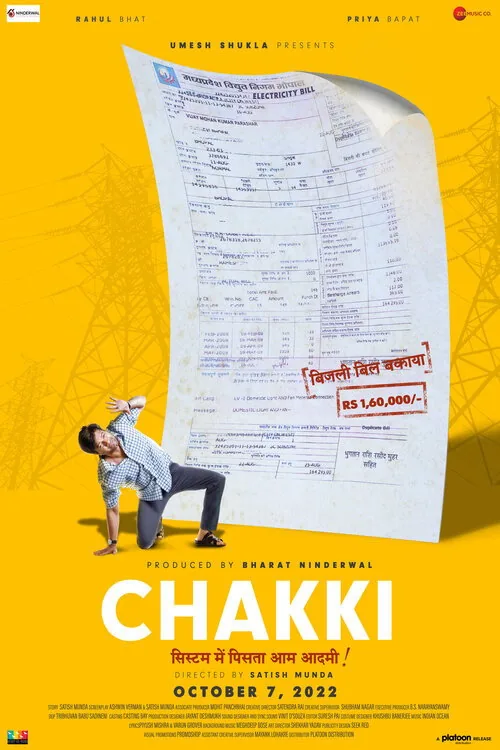
Chakki
An extremely inflated electricity bill leads a small town flour mill owner to the darkest corners of the government office infested with corruption, inefficient officials and apathy of the worst kind.
Summary
Chakki (2022) follows a small-town flour mill owner whose life is thrown into turmoil when he receives an electricity bill wildly beyond anything his business could possibly owe. What initially appears to be a simple clerical error soon becomes an exhausting confrontation with a government system designed to pass responsibility from one desk to another. At the center is the mill owner, an ordinary working man whose livelihood depends on keeping his modest business running. He is neither powerful nor politically connected, and his attempts to correct the bill draw him into a maze of offices, forms, explanations, delays, and contradictory instructions. Alongside him are his family members and fellow townspeople, who reflect the economic pressures and frustrations of people living close to the margins. The officials he encounters range from indifferent clerks to self-protective administrators, creating a portrait of an institution where procedure matters more than justice and accountability is perpetually deferred. The film uses the inflated bill as a deceptively simple premise to examine larger failures in public life. Its satire targets corruption, bureaucratic inefficiency, institutional arrogance, and the casual apathy with which ordinary citizens are treated. At the same time, Chakki is grounded in the protagonist’s struggle to preserve his dignity and support his family, giving its social commentary an emotional human core. Rather than presenting corruption as the work of a single villain, the film depicts it as a pervasive culture sustained by silence, inconvenience, and the belief that challenging the system is futile. With a performance-driven approach and a blend of realism and dark humor, Chakki turns an everyday administrative nightmare into a broader story about power and helplessness. Its central question is not merely whether one man can get an incorrect bill fixed, but how much effort an ordinary citizen must expend to be heard in a system that should exist to serve him.