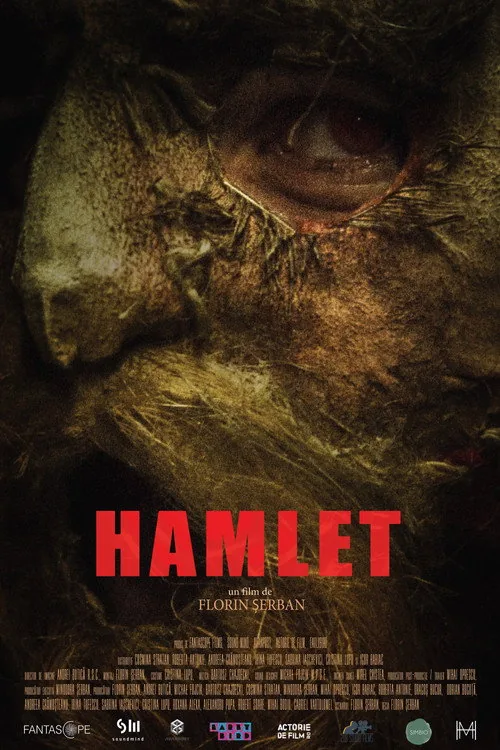
Hamlet
Hamlet – the casting.
A theatre director intends to make a revolutionary version of Hamlet. It all starts with finding the right actors and putting their lives in danger.
Summary
Hamlet (2025) follows an ambitious theater director determined to stage a radical, “revolutionary” interpretation of Shakespeare’s tragedy. His project begins with the search for the right actors, but the casting process quickly becomes more than an artistic exercise. As the performers are drawn into the roles of Hamlet, Ophelia, Claudius, and the rest of the play’s troubled court, the boundaries between rehearsal and reality begin to erode, placing their personal safety—and possibly their lives—in danger. At the center is the director, a visionary but increasingly obsessive artist whose desire to break convention drives the production forward. Around him is an ensemble of actors whose private histories, rivalries, fears, and ambitions become entangled with the characters they are portraying. The actor chosen to play Hamlet must confront the role’s familiar questions of grief, betrayal, indecision, and revenge, while the performers cast as Ophelia, Claudius, Gertrude, and the other central figures find Shakespeare’s conflicts reflected in their own relationships. Rather than presenting Hamlet as a conventional literary adaptation, the film uses the production itself as a pressure cooker. Theatrical experimentation becomes a source of suspense, and the classic play’s themes of deception, surveillance, corruption, and fractured identity take on an immediate, contemporary force. It also explores the dangerous power of art: how the pursuit of authenticity can become manipulative, how performers can lose themselves in their roles, and how a director’s artistic ambition can endanger the people expected to realize his vision. The result is a self-conscious, psychologically charged take on Shakespeare, blending backstage drama with mounting peril. Its central question is not simply what Hamlet means, but what people are willing to sacrifice in order to make a familiar story feel newly—and dangerously—alive.