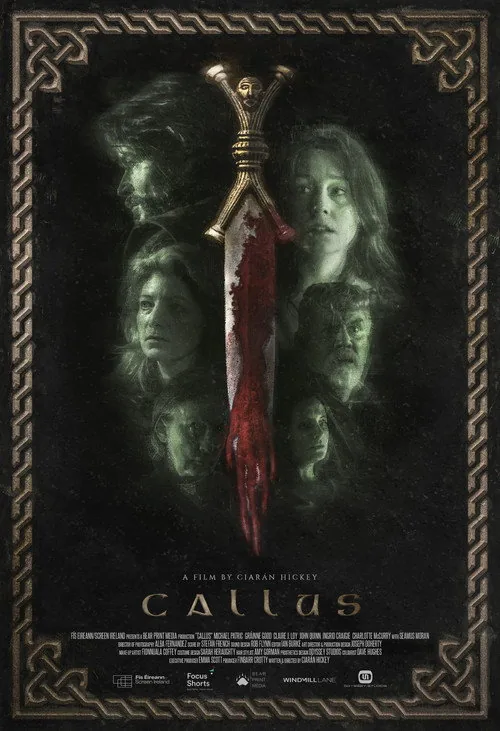
Callus
When his daughter is born with an affliction warned of in fable, a widowed father struggles to defy the violent superstitions of their rural community.
Summary
Callus (2023) is a dark rural folk-horror drama about a widowed father whose newborn daughter bears a mysterious affliction long feared in local fables. In an isolated community governed as much by superstition as by tradition, the child’s condition quickly becomes a source of suspicion and terror. As neighbors turn an old story into a justification for cruelty, the father is forced to choose between obeying the community’s beliefs and protecting his daughter from the violence they inspire. The father is the film’s emotional center: grieving his wife, exhausted by parenthood, and increasingly isolated as he tries to understand what has happened to his child. His daughter, though too young to speak for herself, becomes the focus of the village’s fears and the clearest test of its humanity. Around them, the townspeople function as both individuals and a collective force, reflecting how easily fear can harden into persecution. Rather than relying solely on supernatural shocks, Callus builds its unease through an atmosphere of secrecy, inherited belief, and escalating communal pressure. Its central themes include parental devotion, the danger of scapegoating, and the way folklore can be manipulated to legitimize brutality. The film also examines the conflict between compassion and conformity, asking whether the truly monstrous threat lies in the child who is different or in the society determined to punish her for it.