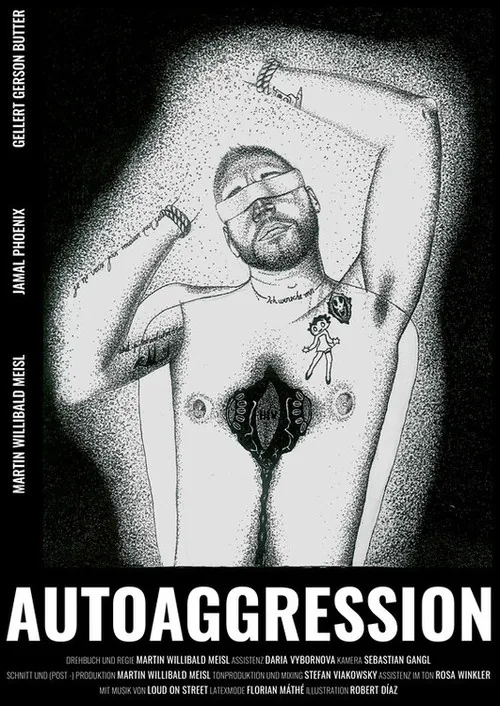
Autoaggression
An autobiographical short film about bugchasing, the intentional self infection with HIV. In the work author and director Martin Willibald Meisl deals with his memories and tries to explore his motivations. - When did the tendency towards self-destructive behavior arise and which ones can be seen? For that, he works with reenactments of artworks such as photos by Joel-Peter Witkin or Michaelangelo’s Pietá. A look at the later consequences of the decision is given. Discrimination, side effects of the therapy, and feelings towards the fresh infection. There is a clear change in his sexuality, and new positions taken.
Summary
Autoaggression is a deeply personal autobiographical short film in which writer and director Martin Willibald Meisl examines his involvement with bugchasing—the deliberate pursuit of HIV infection—and the self-destructive impulses that shaped his decisions. Rather than presenting the subject as a sensational provocation, Meisl approaches it as an intimate investigation into memory, desire, shame, and the need to understand oneself. He revisits key moments in his life and asks when destructive behavior first emerged, how it manifested, and what emotional or psychological needs it may have concealed. Meisl is the film’s central figure, both as narrator and as the person attempting to reconstruct his past. Through reenactments and carefully composed visual tableaux, including references to the unsettling photography of Joel-Peter Witkin and Michelangelo’s Pietà, the film turns private recollection into something ritualistic and symbolic. These images evoke vulnerability, bodily transformation, suffering, and the complicated relationship between care and harm. The film also looks beyond the decision itself, considering the practical and emotional consequences of living with HIV: discrimination, the side effects of treatment, changing perceptions of the body, and the difficult feelings associated with a newly altered identity. As Meisl reflects on the transformation of his sexuality and the positions he has since adopted, Autoaggression becomes less a conventional account of one controversial choice than a searching portrait of self-examination. Its central themes include compulsive behavior, stigma, bodily autonomy, queer identity, mortality, and the tension between wanting connection and inflicting damage on oneself. Challenging but empathetic, the film leaves space for contradiction, presenting its subject neither as a curiosity nor as a simple cautionary example, but as a person trying to confront the forces that shaped his life.