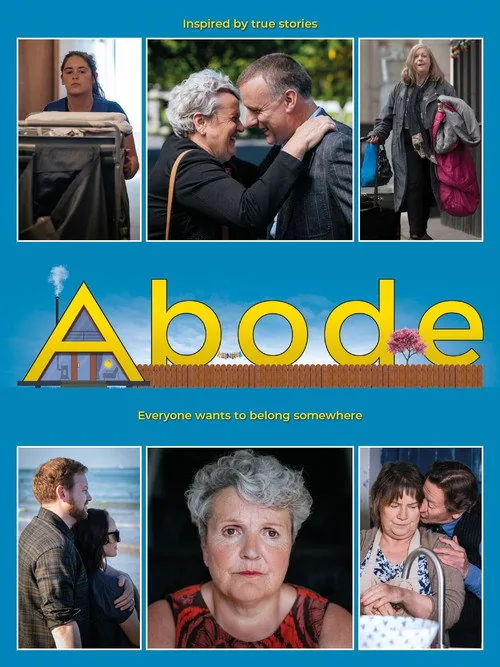
Abode
Everyone wants to belong somewhere
In ABODE, five interwoven stories explore the meaning of home, across city streets and country kitchens, strained families and surreal technologies, revealing how identity, memory, and connection shape the places we call our own.
Summary
Abode (2025) is an interconnected anthology about the many ways people try to define, preserve, and reclaim a sense of home. Rather than centering on one protagonist, the film moves among five distinct but subtly connected stories, shifting between city streets and country kitchens, intimate family spaces and environments transformed by strange, almost surreal technologies. Its principal characters include relatives struggling to remain close despite old resentments, people facing the emotional distance that can exist even under the same roof, and individuals whose relationships with memory and technology blur the boundary between the familiar and the uncanny. Across these stories, homes become more than physical locations: they are repositories of personal history, expressions of identity, and places shaped by the people who have left them, returned to them, or never fully felt they belonged in them. The film’s central themes are belonging, memory, family fracture, and the uneasy relationship between human connection and technological change. Its separate narratives gradually echo one another, suggesting that home can be inherited, constructed, imagined, or carried within us. Abode is less interested in offering a single definition of domestic life than in showing how fragile and changeable that definition can be, balancing grounded family drama with moments of surrealism and quiet emotional unease.