
A New Romance of Celluloid: The Miracle of Sound
A New Romance of Celluloid: The Miracle of Sound
1940-10-24
6.7 / 10 ( 6)

Hedy Lamarr (born Hedwig Eva Maria Kiesler; November 9, 1914 – January 19, 2000) was an Austrian-born actress and technology inventor. She was a film star during Hollywood's Golden Age. After a brief early film career in Czechoslovakia, including the controversial Ecstasy (1933), she fled from her first husband, a wealthy Austrian ammunition manufacturer, and secretly moved to Paris. Traveling to London, she met Metro-Goldwyn-Mayer studio head Louis B. Mayer, who offered her a movie contract in Hollywood. She became a film star with her performance in Algiers (1938). Her MGM films include Lady of the Tropics (1939), Boom Town (1940), H.M. Pulham, Esq. (1941), and White Cargo (1942). Her greatest success was as Delilah in Cecil B. DeMille's Bible-inspired Samson and Delilah (1949). She also acted on television before the release of her final film, The Female Animal (1958). She was honored with a star on the Hollywood Walk of Fame in 1960. At the beginning of World War II, she and avant-garde composer George Antheil developed a radio guidance system for Allied torpedoes that used spread spectrum and frequency hopping technology to defeat the threat of jamming by the Axis powers. This system later became the basis for what is now known as Bluetooth. Description above from the Wikipedia article Hedy Lamarr, licensed under CC-BY-SA, full list of contributors on Wikipedia.
Born: 1914-11-09 in Vienna, Austria
Showing41to52of52results
A New Romance of Celluloid: The Miracle of Sound

Showbiz Goes to War

Crossroads

Mondo Hollywood

Extase

Show-Business at War

Beautiful Like a Poem

Bombshell: The Hedy Lamarr Story

That's Entertainment, Part II

Samson and Delilah

Boom Town

Comrade X

The Story of Mankind

I cavalieri dell'illusione
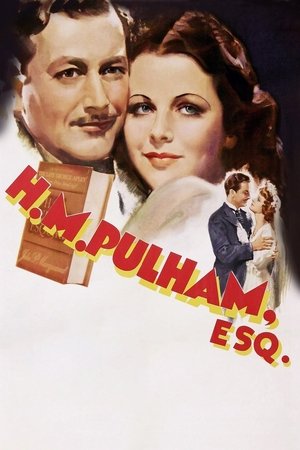
H.M. Pulham, Esq.

Ziegfeld Girl

Hollywood Goes to Town

Hollywood: No Sex, Please!

Hollywood Blue

The Strange Woman
Showing41to52of52results