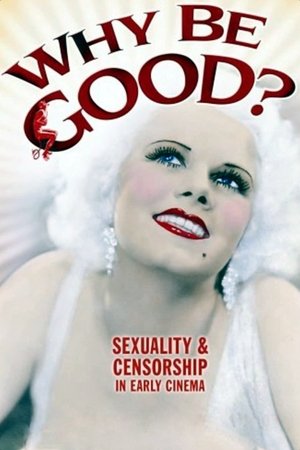
Why Be Good?: Sexuality & Censorship in Early Cinema
Why Be Good?: Sexuality & Censorship in Early Cinema
2007-05-23
4.3 / 10 ( 5)
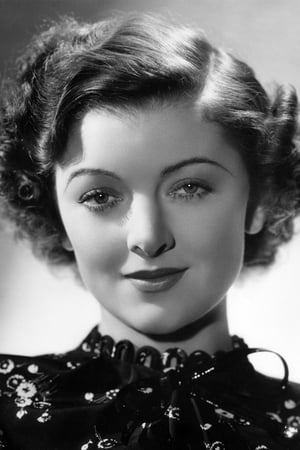
From Wikipedia, the free encyclopedia Myrna Loy (August 2, 1905 – December 14, 1993) was an American actress. Trained as a dancer, she devoted herself fully to an acting career following a few minor roles in silent films. Originally typecast in exotic roles, often as a vamp or a woman of Asian descent, her career prospects improved following her portrayal of Nora Charles in The Thin Man (1934). Her successful pairing with William Powell resulted in 14 films together, including five subsequent Thin Man films. Although Loy was never nominated for a competitive Academy Award, in March 1991 she was presented with an Honorary Academy Award with the inscription "In recognition of her extraordinary qualities both on screen and off, with appreciation for a lifetime's worth of indelible performances." During World War II, Loy served as assistant to the director of military and naval welfare for the Red Cross. She was later appointed a member-at-large of the U.S. Commission to UNESCO. Her acting career by no means ended in the 1940s. She continued to actively pursue stage and television appearances in addition to films in subsequent decades.
Born: 1905-08-02 in Radersburg, Montana, USA
Why Be Good?: Sexuality & Censorship in Early Cinema

A New Romance of Celluloid: The Miracle of Sound

The Best Years of Our Lives

The Legend of Rudolph Valentino

The Truth About Youth

The Heart of Maryland

The Devil to Pay!

Double Wedding

Mr. Blandings Builds His Dream House

Wings in the Dark

The Senator Was Indiscreet
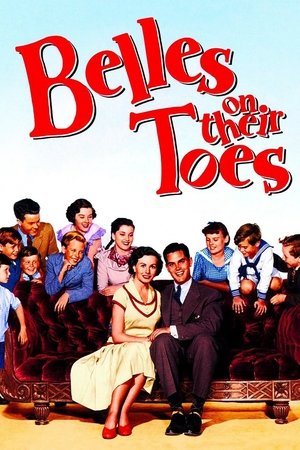
Belles on Their Toes

That Dangerous Age
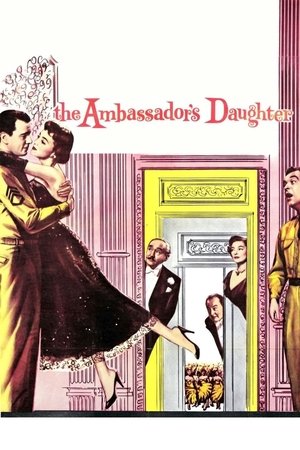
The Ambassador's Daughter

New Morals for Old
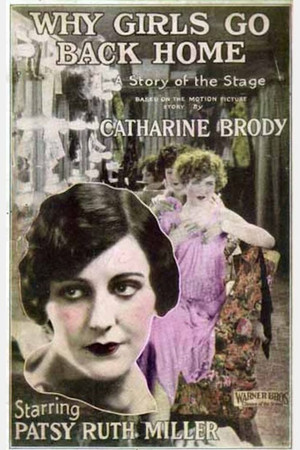
Why Girls Go Back Home

Meet Me in St. Louis

Show-Business at War

The Mask of Fu Manchu

Consolation Marriage